RSS
Hello! Welcome to the Great Movies Database.

Today news: Larry King, Legendary Broadcasting Giant, Dies at 87


LOS ANGELES — Larry King, the suspenders-sporting everyman whose broadcast interviews with world leaders, movie stars and ordinary Joes helped define American conversation for a half-century, died Saturday. He was 87.

King died at Cedars-Sinai Medical Center in Los Angeles, Ora Media, the studio and network he co-founded, tweeted. No cause of death was given, but CNN reported Jan. 2 that King had been hospitalized for more than a week with COVID-19. His son Chance also confirmed King’s death, CNN reported.

A longtime nationally syndicated radio host, from 1985 through 2010 he was a nightly fixture on CNN, where he won many honors, including two Peabody awards.

With his celebrity interviews, political debates and topical discussions, King wasn’t just an enduring on-air personality. He also set himself apart with the curiosity be brought to every interview, whether questioning the assault victim known as the Central Park jogger or billionaire industrialist Ross Perot, who in 1992 rocked the presidential contest by announcing his candidacy on King’s show.

In its early years, “Larry King Live” was based in Washington, which gave the show an air of gravitas. Likewise King. He was the plainspoken go-between through whom Beltway bigwigs could reach their public, and they did, earning the show prestige as a place where things happened, where news was made.

King conducted an estimated 50,000 on-air interviews. In 1995 he presided over a Middle East peace summit with PLO Chairman Yasser Arafat, King Hussein of Jordan and Israeli Prime Minister Yitzhak Rabin. He welcomed everyone from the Dalai Lama to Elizabeth Taylor, from Mikhail Gorbachev to Barack Obama, Bill Gates to Lady Gaga.

Especially after he relocated to Los Angeles, his shows were frequently in the thick of breaking celebrity news, including Paris Hilton talking about her stint in jail in 2007 and Michael Jackson’s friends and family members talking about his death in 2009.

King boasted of never overpreparing for an interview. His nonconfrontational style relaxed his guests and made him readily relatable to his audience.

“I don’t pretend to know it all,” he said in a 1995 Associated Press interview. “Not, `What about Geneva or Cuba?′ I ask, `Mr. President, what don’t you like about this job?′ Or `What’s the biggest mistake you made?′ That’s fascinating.”

At a time when CNN as the lone player in cable news was deemed politically neutral, and King was the essence of its middle-of-the-road stance, political figures and people at the center of controversies would seek out his show.

And he was known for getting guests who were notoriously elusive. Frank Sinatra, who rarely gave interviews and often lashed out at reporters, spoke to King in 1988 in what would be the singer’s last major TV appearance. Sinatra was an old friend of King’s and acted accordingly.

“Why are you here?” King asks. Sinatra responds, “Because you asked me to come and I hadn’t seen you in a long time to begin with, I thought we ought to get together and chat, just talk about a lot of things.”

King had never met Marlon Brando, who was even tougher to get and tougher to interview, when the acting giant asked to appear on King’s show in 1994. The two hit it off so famously they ended their 90-minute talk with a song and an on-the-mouth kiss, an image that was all over media in subsequent weeks.

After a gala week marking his 25th anniversary in June 2010, King abruptly announced he was retiring from his show, telling viewers, “It’s time to hang up my nightly suspenders.” Named as his successor in the time slot: British journalist and TV personality Piers Morgan.

By King’s departure that December, suspicion had grown that he had waited a little too long to hang up those suspenders. Once the leader in cable TV news, he ranked third in his time slot with less than half the nightly audience his peak year, 1998, when “Larry King Live” drew 1.64 million viewers.

His wide-eyed, regular-guy approach to interviewing by then felt dated in an era of edgy, pushy or loaded questioning by other hosts.

Meanwhile, occasional flubs had made him seem out of touch, or worse. A prime example from 2007 found King asking Jerry Seinfeld if he had voluntarily left his sitcom or been canceled by his network, NBC.

“I was the No. 1 show in television, Larry,” replied Seinfeld with a flabbergasted look. “Do you know who I am?”

Always a workaholic, King would be back doing specials for CNN within a few months of performing his nightly duties.

He found a new sort of celebrity as a plainspoken natural on Twitter when the platform emerged, winning over more than 2 million followers who simultaneously mocked and loved him for his esoteric style.

“I’ve never been in a canoe. #Itsmy2cents,” he said in a typical tweet in 2015.

His Twitter account was essentially a revival of a USA Today column he wrote for two decades full of one-off, disjointed thoughts. Norm Macdonald delivered a parody version of the column when he played King on “Saturday Night Live,” with deadpan lines like, “The more I think about it, the more I appreciate the equator.”

King was constantly parodied, often through old-age jokes on late-night talk shows from hosts including David Letterman and Conan O’Brien, often appearing with the latter to get in on the roasting himself.

King came by his voracious but no-frills manner honestly.

He was born Lawrence Harvey Zeiger in 1933, a son of Jewish immigrants from Eastern Europe who ran a bar and grill in Brooklyn. But after his father’s death when Larry was a boy, he faced a troubled, sometimes destitute youth.

A fan of such radio stars as Arthur Godfrey and comedians Bob & Ray, King on reaching adulthood set his sights on a broadcasting career. With word that Miami was a good place to break in, he headed south in 1957 and landed a job sweeping floors at a tiny AM station. When a deejay abruptly quit, King was put on the air — and was handed his new surname by the station manager, who thought Zeiger “too Jewish.”

A year later he moved to a larger station, where his duties were expanded from the usual patter to serving as host of a daily interview show that aired from a local restaurant. He quickly proved equally adept at talking to the waitresses, and the celebrities who began dropping by.

By the early 1960s King had gone to yet a larger Miami station, scored a newspaper column and become a local celebrity himself.

At the same time, he fell victim to living large.

“It was important to me to come across as a ‘big man,”’ he wrote in his autobiography, which meant “I made a lot of money and spread it around lavishly.”

He accumulated debts and his first broken marriages (he was married eight times to seven women). He gambled, borrowed wildly and failed to pay his taxes. He also became involved with a shady financier in a scheme to bankroll an investigation of President John Kennedy’s assassination. But when King skimmed some of the cash to pay his overdue taxes, his partner sued him for grand larceny in 1971. The charges were dropped, but King’s reputation appeared ruined.

King lost his radio show and, for several years, struggled to find work. But by 1975 the scandal had largely blown over and a Miami station gave him another chance. Regaining his local popularity, King was signed in 1978 to host radio’s first nationwide call-in show.

Originating from Washington on the Mutual network, “The Larry King Show” was eventually heard on more than 300 stations and made King a national phenomenon.

A few years later, CNN founder Ted Turner offered King a slot on his young network. “Larry King Live” debuted on June 1, 1985, and became CNN’s highest-rated program. King’s beginning salary of $100,000 a year eventually grew to more than $7 million.

A three-packs-a-day cigarette habit led to a heart attack in 1987, but King’s quintuple-bypass surgery didn’t slow him down.

Meanwhile, he continued to prove that, in his words, “I’m not good at marriage, but I’m a great boyfriend.”

He was just 18 when he married high school girlfriend Freda Miller, in 1952. The marriage lasted less than a year. In subsequent decades he would marry Annette Kay, Alene Akins (twice), Mickey Sutfin, Sharon Lepore and Julie Alexander.

In 1997, he wed Shawn Southwick, a country singer and actress 26 years his junior. They would file for divorce in 2010, rescind the filing, then file for divorce again in 2019.

The couple had two sons, King’s fourth and fifth kids, Chance Armstrong, born in 1999, and Cannon Edward, born in 2000. In 2020, King lost his two eldest children, Andy King and Chaia King, who died of unrelated health problems within weeks of each other.

He had many other medical issues in recent decades, including more heart attacks and diagnoses of type 2 diabetes and lung cancer.

Through his setbacks he continued to work into his late 80s, taking on online talk shows and infomercials as his appearances on CNN grew fewer.

“Work,” King once said. “It’s the easiest thing I do.”

Funeral arrangements and a memorial service will be announced later in coordination with the King family, “who ask for their privacy at this time,” according to the tweet from Ora Media.

___

Former AP Television Writer Frazier Moore contributed biographical material to this report.

Today news: 6 Rookie K-Pop Groups to Watch in 2021


The K-pop acts of 2020 debuted under unprecedented conditions. As the COVID-19 pandemic raged on, artists made their first performances on local music shows in South Korea but without a live audience singing along and chanting the names of their favorites—one of the experiences most anticipated by idols in training. Still, a few dozen rookie acts entered the K-pop scene last year and enthusiastically interacted with fans through online platforms as both parties awaited the day when in-person gatherings could resume.

The K-pop groups that particularly caught our attention range in size—consisting of anywhere between four and 12 members. They also vary in their output, from a single song to a full-length album. In addition to releasing good music, they’ve surprised in one way or another and are poised to make even larger waves in 2021.

Here, the new K-pop groups to watch in the year to come.

TREASURE

Members: Choi Hyunsuk, Jihoon, Yoshi, Junkyu, Mashiho, Yoon Jaehyuk, Asahi, Bang Yedam, Haruto, Doyoung, Park Jeongwoo, So Junghwan

TREASURE’s debut was long-awaited. Though YG Treasure Box, the reality competition show that formed the group, completed airing in January 2019, it wasn’t until more than a year later that the act officially debuted. Thankfully, the pre-debut variety series Treasure Map—which captured everything from light-hearted games to a heartwarming surprise for one member’s high school graduation—offered a way for fans to follow the lives of the 12 members in the meantime. In August 2020, the ensemble from YG Entertainment (home to BLACKPINK) debuted with the title track, “Boy.” In each of TREASURE’s first three single albums, the group paired a hard-hitting lead single with a laid-back second track, showcasing its versatility. These releases led up to TREASURE’s first studio album, The First Step: Treasure Effect, which dropped on Jan. 11. Perhaps most exciting is the inclusion of the act’s pre-debut song “Going Crazy.” Both that song and the latest title track, “My Treasure,” feature dynamic melodies that highlight the members’ rich and varied vocal colors—a true strength of the group.

aespa

Members: Karina, Giselle, Winter, NingNing

In the days leading up to its debut, aespa dropped an unconventional teaser photo: the image shows eight women in a room—but only four of them are humans. That’s because the other four are virtual counterparts of members Karina, Giselle, Winter and NingNing. In later video trailers, the animated characters are seen singing, rapping and dancing alongside the real-life beings. Anticipation was already high for SM Entertainment’s new girl group—the first female act to debut from the powerhouse label since Red Velvet in 2014—and the introduction of these avatars only heightened curiosity around aespa. But more than the digital renditions of the members, it was aespa’s first single, “Black Mamba,” that dominated attention. The music video for this high-intensity track with booming synth notes, rich vocals and the climactic choreography of a sudden floor-drop became the fastest K-pop group debut music video to reach 100 million views on YouTube. Though “Black Mamba” is aespa’s only release thus far, its success has positioned the act in a prime spot among the rookies of 2020.

P1Harmony

Members: Keeho, Theo, Jiung, Intak, Soul, Jongseob

P1Harmony’s entry to the K-pop scene came with a cinematic surprise: a full-length sci-fi film, P1H: A New World Begins, starring the group’s six members. The movie, created to build a fictional universe around their identity, hit theaters in South Korea on Oct. 8, just weeks before the new FNC Entertainment act dropped its first EP, Disharmony: Stand Out. While the approach of a K-pop group making a debut on the big screen was creative, it was the content in this hip-hop heavy EP that established P1Harmony as a formidable rookie act. “Siren,” the lead single, features an addicting hook and a clever use of quasi-homophones—wiheom, the Korean word for danger and wiong, which imitates the sound of a siren—to deliver a sense of urgency. The other tracks from the release are bangers in their own fashion, packed with punchy rap verses that the members helped to write. And while the rap portions of P1Harmony’s tracks are a highlight, the stream of choreography videos posted over the past months proves that the members have dance chops to show off, too.

STAYC

Members: Sumin, Sieun, Isa, Seeun, Yoon, J

STAYC’s debut song, “So Bad,” has one of the catchiest choruses in recent memory. That was to be expected, considering the track was produced by Black Eyed Pilseung—the songwriting duo behind some of the biggest K-pop hits including TWICE’s “Fancy,” Chungha’s “Gotta Go,” and Apink’s “Dumhdurum” (one of TIME’s Songs That Defined K-pop’s Monumental Year in 2020.) Black Eyed Pilseung had partnered with entertainment company CJ E&M to launch the music label High Up Entertainment, and STAYC is the first group to debut from the agency. Though the six-member ensemble has only released two songs—“So Bad” and “Like This” on the single album Star to a Young Culture—both have set a promising path for more hits ahead. With their stable live singing (a video shows the vocalists hitting high notes with ease) and bold charisma, the STAYC members have demonstrated an undeniable ability to command the stage. And while their own discography is limited, the artists have shown through dance covers of popular K-pop songs that they are capable of pulling off different types of performances from sweet to sleek.

ENHYPEN

Members: Jungwon, Heeseung, Jay, Jake, Sunghoon, Sunoo, Ni-ki

Even before ENHYPEN made its official debut, the group amassed a huge following on social media: more than one million on Twitter, two million on Instagram and three million on the fan community platform Weverse. The fans didn’t materialize from nowhere—the seven members gained popularity when they participated in the reality competition show I-LAND, which created ENHYPEN’s lineup through a combination of global fan votes and producer selection. Debuting under BELIFT LAB, a joint venture between Big Hit Entertainment and CJ ENM, ENHYPEN kicked off with the lead single “Given-Taken.” The track is about the uncertainties around debuting through the circumstances of a reality TV show: was it an opportunity “given” to the members, or one “taken” by their own efforts? The performance for “Given-Taken” is sharp and slick, and filled with dance moves that can only be executed collectively—with every member’s action being an integral part of the whole. Through this title track and other songs on the EP Border: Day One, ENHYPEN has made it clear that delivering intricate choreography, no matter the song’s vibe, is the group’s forte.

WEEEKLY

Members: Soojin, Jiyoon, Monday, Soeun, Jaehee, Jihan, Zoa

Among the groups that debuted in 2020, WEEEKLY has stood apart for fully embracing a youthful and bright sound at a time when sexy and dark concepts from K-pop female acts are arguably at peak popularity. Play M Entertainment’s first girl group in 10 years (the last to debut was Apink), WEEEKLY has released two EP’s—We are and We can—since the group debuted last June. Member Jiyoon has writing credits on four of the 10 tracks, establishing herself as a prolific songwriter early on. The group’s first title track, “Tag Me (@Me),” opens with a chirpy chant about the loud reactions to a social media post and continues as the members sing about the scrutiny of their timelines. But the song is less a stern rebuke of internet culture and more a benign reminder to stay true to oneself amid the online noise. The other tracks across the two projects, upbeat and playful, solidify WEEEKLY’s image as a group with refreshing charm.

Today news: The Best Result of the Streaming Boom? America Finally Loves Foreign-Language TV


Are marriage thrillers over? If, like so many other HBO subscribers, you watched David E. Kelley’s plodding, egregiously anticlimactic Big Little Lies follow-up The Undoing—or Netflix’s unnecessary Rebecca remake, for that matter—you could be forgiven for assuming that the subgenre Gillian Flynn’s Gone Girl revitalized nearly a decade ago had run out of ideas. Still, you’d be wrong. This week marks the premiere of my favorite variation on the theme in years: Losing Alice, a sultry, cinematic, psychologically rich drama that unfolds between a middle-aged filmmaker, her actor husband and a seemingly unstable young writer who wants them to bring her first screenplay to life.

Built around Daredevil alum Ayelet Zurer’s magnificently layered turn as the title character, the eight-part auteur project from creator, director and writer Sigal Avin is the kind of twisty, fast-paced mystery that will inevitably be described as addictive. And it is. But that undersells Avin’s achievement. Losing Alice, which comes to Apple TV+ on Jan. 22, avoids the crutches of second-rate thrillers like The Undoing: unbelievable coincidences, characters whose inner lives are black boxes, cliffhangers that appear out of nowhere at the end of one episode only to be dispatched within the first few minutes of the next. Instead, Avin patiently investigates the nature of relationships between husbands and wives, parents and children, women of different generations, older men and younger women—and, in a stunning finale, between life and art.

Although it’s a shame the show hasn’t attracted more advance attention in the U.S., it’s also worth celebrating that Americans will have a chance to see it at all. Presented in Hebrew with English subtitles, Losing Alice comes to Apple’s streaming service from Israel—and is thus the kind of title that, as recently as a decade ago, struggled to find a home on stateside television. While generations of Americans have had access to British period dramas on PBS, Canadian teen soaps on cable and other Anglophone imports, networks shied away from subtitled fare. Our canon reflects that oversight: everything on TIME’s own top-100 shows list, published in 2007, is in English. But streaming has quickly remade the TV landscape. And if those changes haven’t all been positive, the vast catalog of foreign-language shows now available in the U.S. via mainstream streaming platforms might be the single best side effect of the paradigm shift.

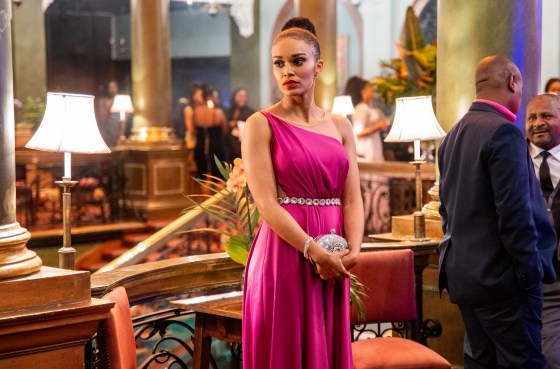
NetflixPearl Thusi as Queen Sono

The reasons for this rapid influx are many. Traditional TV providers, from free, over-the-air broadcasters to cable companies, served geographically or linguistically distinct national audiences. (And when pay-TV creators like HBO and MTV went global, it was through discrete overseas spin-off channels.) Streaming, by contrast, was built to scale. Netflix, whose first exclusive offering, in 2012, was the bilingual Norwegian import Lilyhammer, is currently available in more than 190 countries. Now, in addition to licensing shows and movies in dozens of languages, it produces and co-produces them all over the world; last year, Netflix launched its first African original, the multilingual Queen Sono. Multinational conglomerates like AT&T subsidiary HBO Max have stocked the digital shelves of their newly launched streaming services with programming from international sister stations. Peacock has shows from corporate parent Comcast’s Spanish-language property Telemundo. And during the pandemic, foreign-language programming has helped to fill a gap caused by production shutdowns.

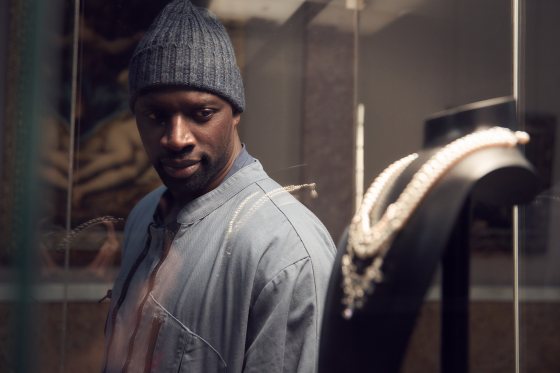
So far, the internationalization of TV has been a resounding success. Netflix announced in January that Lupin—a propulsive new crime drama that reimagines the classic French “gentleman thief” as a Senegalese immigrant (Omar Sy) plotting to avenge his late father—had cracked the U.S. top 10 and was on track to reach more viewers than last year’s English-language hits Bridgerton and The Queen’s Gambit. And as part of the long-tail economy that is Peak TV, hundreds of shows from abroad have won over Americans who’ve dropped cable and now stuff their streaming queues with romantic Korean dramas or chilly Nordic thrillers or kinetic Japanese anime.

DSC09177.ARW
Emmanuel Guimier/NetflixOmar Sy in ‘Lupin’

What has made Americans—who are notorious for failing to learn second languages, as well as for avoiding foreign films and literature in translation—embrace this stuff? For one thing, with megacorps like Disney pouring funds into an IP-heavy TV development strategy borrowed from their movie studios, foreign-language television is starting to feel like as much of a refuge as foreign-language cinema has long been from brainless, big-budget Hollywood spectacles. Lest we get too proud of our newfound sophistication, the shift also reflects Netflix and some other services’ choice to invest in dubbing rather than ask viewers to read subtitles—a business-savvy but artistically bankrupt decision that robs audiences of the original actors’ voices.

Still, even dubbed versions have something. International scripted series aren’t documentaries, of course. But they do reflect the norms of other cultures; they capture how people halfway around the world talk about politics and family and work and love. Netflix’s Weimar period piece Babylon Berlin and the Cold War thriller Deutschland 83, streaming on Hulu, are excellent German dramas that shed light on how that country has processed its dark 20th century. Gomorrah, a gritty Neapolitan gangster saga whose fixation on broken systems recalls The Wire (and whose third season just arrived on HBO Max), offers a window into the Italian criminal justice system. Shows made in places where white people aren’t in the majority can subtly shift a Western viewer’s perspective on race.

On top of the inherent benefits that come with enjoying good art, immersing ourselves in stories from faraway lands can illuminate the blind spots in our own perspectives. In a country obsessed with TV—where provincialism too often metastasizes into nationalism, and especially at a time when international travel is virtually impossible—the best thing our screens can do is open us up to the world beyond them.

Today news: The White Tiger Is a Complex Crime Drama with a Dazzling Performance at Its Center


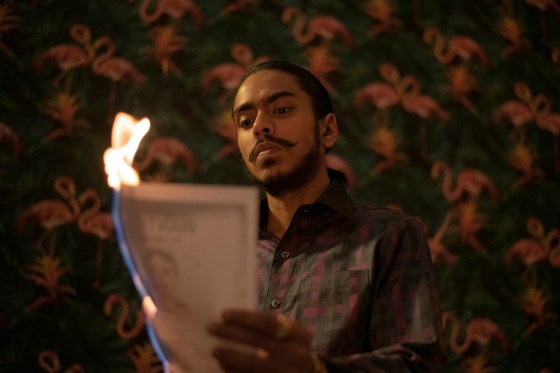
Sometimes a great face is all you really need to set a movie spinning, and Ramin Bahrani’s The White Tiger, adapted from Aravind Adiga’s 2008 novel, has one: Adarsh Gourav plays Balram, the antihero of this sometimes bitterly funny, sometimes wrenching crime drama. When we first meet him, he is a slick, self-styled entrepreneur in Bangalore, a city he calls “the Silicon Valley of India.” But this wily, ambitious Balram—with his trendy clothes and neatly waxed mustache—used to be a very different Balram, a kid from a small village who saw his father work himself into an early death, funneling every rupee he made to the boy’s controlling grandmother, a formidable figure he calls granny. (In this story, there’s no room for warm matriarchal stereotypes doling out unconditional love.)

But Balram is exceptionally bright, and he’s good at school—an academic dignitary likens him to the “white tiger,” a special being who comes around just once a generation. And so, as a teenager, Balram decides to become a driver, in the hopes of leaving his village for a better life. He heads for the city and finagles his way into a job with the tyrannical landlord known as the Stork (Mahesh Manjrekar) who used to extort money from his village. Balram eventually becomes the personal driver of the Stork’s son, Ashok (played by the enormously appealing Rajkummar Rao), a progressive-minded young man who has spent time in America and has brought a raised-in-America wife, Pinky (Priyanka Chopra), home with him. Balram becomes their fawning servant not because it’s his choice but because it’s his destiny: this isn’t just the best job he can find; it’s the job he was born to do.

THE WHITE TIGER
NETFLIX—© 2020 Netflix, Inc.Adarsh Gourav ​as ​Balram​

The White Tiger is a bitter indictment of caste-system rigidity embedded within a Scarface-like, rags-to-riches story. You want Balram to succeed even as you recoil at almost every choice he makes along the way: sometimes he’s a victim of others’ cruelty and thoughtlessness. But he also makes calculating and, worse, morally reprehensible choices. This is a complex whirl of a story, and Bahrani—the director of films like Man Push Cart and Goodbye Solo, as well as HBO’s recent Fahrenheit 451—navigates it deftly. Many of the movie’s visual signals are easy to read: you can’t fail to see the contrast between Ashok and Pinky’s large, lavish apartment in Delhi and the cockroach-infested shed Balram calls home—it’s really just a place he goes to sleep, since his work hours essentially have no limits. But the story’s emotional subtleties give it a depth that’s sometimes painful to reckon with. Ashok and Pinky are essentially kind to Balram, but they also condescend to him. This is the push-pull of the master-servant relationship, the key dynamic of the story. Balram is obsequious because he has to be, but he can’t help resenting his bosses’ pedigree and money. He’s also aware that, despite their seemingly modern ways, they see him as inferior. “Do we loathe our masters behind a facade of love,” he asks himself at one point, “or do we love them behind a façade of loathing?” His meager livelihood depends on his capacity for loyalty and subservience, but he can’t help wanting more for himself.

Read more reviews by Stephanie Zacharek

There’s poverty in every country, and in every country there are people yearning to do better for themselves. But The White Tiger—especially Gourav’s performance, marvelous in its intensity and shifting tones—captures that drive in a specific and persuasive way. Balram is a kind of genius, figuring out how to game a complex system, thousands of years old, that’s stacked against him; his opportunism is a survival mechanism. But then—most pronounced in a scene when the Stork tries to use him as a pawn in a heinous scheme—his face betrays a pure and melting guilelessness that can cut right through you. His future depends on learning how not to be a poor country kid. The White Tiger, a fiction set in the recent past, in a real place, is a compelling and extremely well crafted crime drama. But the price Balram pays for his success is a steep one, and the movie’s ending is more unsettling than it is exhilarating. It makes you feel you’ve been left with a problem you can’t solve.

Today news: Wandavision Offers Hope That Originality Can Survive the Era of the Ever-Expanding Franchise


Just a year ago, it was difficult to imagine franchises eating up an even larger chunk of pop culture than they already had. Avengers: Endgame, the final chapter in a decade-long superhero saga, had claimed the title of highest-grossing movie ever made. All 10 of the top movies at the box office in 2019 were franchise films. Franchise fare was even invading the awards race: Joker scored 11 Oscar nominations, the most ever for a superhero movie, and nabbed a win for Joaquin Phoenix.

In the past year, for all its wretchedness, the pandemic’s closure of movie theaters and postponement of blockbusters has offered an unexpected reprieve to anxious cinephiles who fear that superhero franchises are smothering the last vestiges of originality.

But that reprieve won’t last long. Already, the franchise machines are ramping back up. Disney recently announced more than 50 new movies and shows based on existing intellectual property, the bulk of them falling under the Marvel and Star Wars umbrellas. Warner Bros. is expanding its DC superhero content to include not one, but two different superhero universes. (That means two or more Batmen, played by different actors, will be running around parallel-universe Gothams at the same time.) Amazon’s long-anticipated Lord of the Rings show is supposed to debut this year. Heck, even Sex and the City is building a cinematic universe. If you believe that franchise fatigue is destroying capital-C Cinema, the movies and TV due out this year would seem to bear out that theory.

But perhaps not all hope is lost. WandaVision, the Marvel Cinematic Universe’s first project in a year and a half, debuted on Disney+ today. And though it is the lynchpin for the future of the MCU, it is unlike anything Marvel has done before. The show is unexpectedly, wonderfully weird and seemingly designed to appeal to the very people who have written off superhero antics as low-brow entertainment. Of course, as TIME’s TV critic laments in her review, the show demands that to fully understand what’s going on, the audience really ought to check out the 23 movies that came before. That is the cunning genius of Marvel Studios: its very design is meant to convert superhero agnostics into full-blown MCU fans. But if we’re all doomed to board this train for the long haul—and I admittedly hopped aboard long ago—it’s about time that Marvel shook things up, broke away from the typical hero’s journey and explored some truly bizarre stories.

Here’s how WandaVision fits into the MCU’s history of experimentation with style and form, why it’s unique, and why Marvel devotees and agnostics alike should hope it’s a sign of what’s to come.

And if you need a primer on the Wanda and Vision of it all—and how the superhero couple fits into the MCU—you can find that here before reading on.

WandaVision is both a sitcom satire and a Marvel mystery

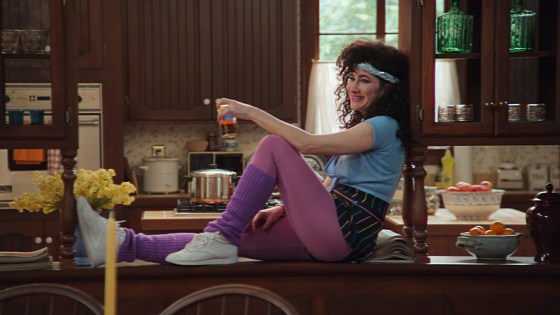
Marvel StudiosKathryn Hahn in WandaVision

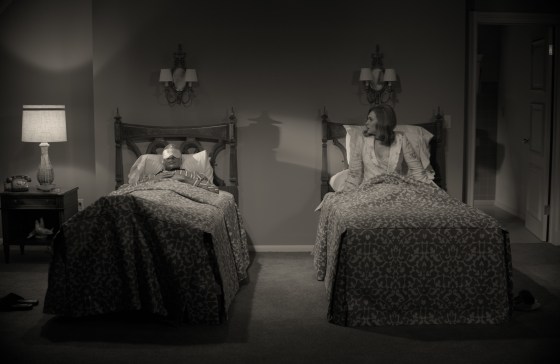
The first episode of WandaVision is a 30-minute comedy in black and white that sends up ’50s-era shows like I Love Lucy. If you come to the show expecting superhero business and immediately feel confused, well, that’s the point. Trailers for the show suggested that Wanda, in her deep depression following Vision’s death, has created some kind of parallel dimension where she can delude herself into thinking that he is still alive, and where they get to live not as an android and a witch but a “normal” couple with all the trappings of normalcy, down to the white picket fence.

Each episode tackles a new decade of family sitcom, from I Love Lucy in the 1950s to Modern Family in the 2010s. At its core, WandaVision is a send-up of these comedies, and a good one at that. Vision phases through a chair in a nod to Rob Petrie tripping over an ottoman in the opening credits to the Dick Van Dyke show. By the 1970s, Wanda and Vision’s house looks eerily similar to the one once occupied by the Brady Bunch. The whole show seems to nod, meta-textually, to the fact that star Elizabeth Olsen grew up on sitcom sets since her sisters Mary-Kate and Ashely Olsen starred in Full House. Kathryn Hahn is an utter delight as the nosy next-door neighbor who seems to be hiding a secret. Each episode has its own theme song, written by Frozen vets Robert Lopez and Kristen Anderson-Lopez in the style of the era.

In this small-screen version of the character, Olsen gets to play emotions other than brave or scared. Her comedic timing is excellent, and she exudes both the determination to build her bubble of happiness as well as the fragility of someone who has experienced trauma, a range that the stuffed Marvel movies rarely have the time to explore.

By the second and third episodes, the show falls into a rhythm, balancing comedic moments with an underlying sense of dread. Wanda’s dream begins to fracture, a la The Truman Show or Pleasantville. Sharp-eyed Marvel fans will spot the allusions to Hydra in the commercial breaks or notice the voice of Randall Park’s character from Ant-Man playing over the radio trying to communicate with Wanda.

Somewhere in Disney’s office probably sits a Venn Diagram that shows how many early family sitcom buffs are also devout Marvel fans. The overlap may be small, but that’s what makes WandaVision Marvel’s most exciting experiment in years. There’s a chance that Marvel agnostics intrigued by the comedic aspects will be turned off by the underlying mystery and Marvel fans will grow impatient with the homages to old Hollywood. The show has to hit just the right balance to pull off both.

Marvel has never actually been all that experimental

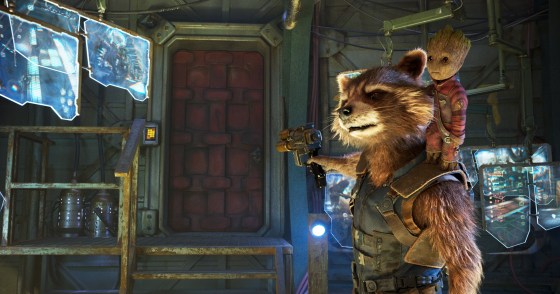
Guardians Of The Galaxy Vol. 2.
©Marvel StudiosRocket, voiced by Bradley Cooper, and Groot, voiced by Vin Diesel in Guardians Of The Galaxy Vol. 2.

The biggest franchise in film history has bizarre origins. The first Iron Man movie is not weird, per se, but it certainly does not have the Disney sheen of the movies that would come after it. Iron Man drinks heavily, beds plenty of women and generally acts fairly unheroic. Aspects of that character remained after Disney acquired Marvel Studios between the first and second Iron Man movies, but his spikiest edges were buffed away until he became a responsible father-like figure in the Avengers and, especially, Spider-Man movies.

What followed was a string of hero origin stories: a hero who is flawed and must be humbled and prove themselves worthy of the cape: Iron Man, Thor and Doctor Strange are hubristic; Ant-Man, Spider-Man, Black Panther and Captain Marvel have their priorities out-of-whack; Captain America isn’t jacked enough. They usually end up fighting someone with their exact same powers. In the sequels, things get personal. The hero must face an AI they themselves created, a rival they ticked off or a sibling/best friend/father who became a villain. Team-up movies would pop up in between.

As time wore on, the heroes got more fantastical—not humans with scientifically-enhanced powers but talking trees and wizards and aliens. The backdrops got cooler—Doctor Strange’s universe beautifully bent in on itself, and a gorgeously-rendered Wakanda inspired millions of moviegoers. But for all the fanfare around Guardians of the Galaxy’s daring decision to feature a talking tree, the stories themselves remained relatively formulaic. (Plus, Lord of the Rings already introduced the world to Ents, so Groot wasn’t a huge stretch.)

To Marvel’s credit, the studio seems to offer its directors more creative bandwidth than, say, LucasFilm, which has earned a reputation for ensuring directors will align with the Star Wars vision (and even firing directors who don’t). The team at Marvel does an excellent job of identifying directors with a unique voice—particularly Ryan Coogler, who built an entirely new and utterly compelling country and culture for Black Panther, and Taika Waititi, who resurrected the deadly boring Thor franchise with the super-fun, psychedelic Thor: Ragnarok.

And the final two Avengers movies certainly surprised fans. Avengers: Infinity War ended with the villain winning, an unprecedented state of affairs in modern superhero films. Not only that, but he snapped his fingers and made half the living creatures on earth—including half of the superheroes we’d come to know and love in the MCU—disappear. Now, nobody over the age of 10 actually thought this was a permanent state of affairs. You don’t reboot the Spider-Man movies with Tom Holland to only make one Tom Holland Spider-Man movie. (And anyone with access to Google could discover that Holland was under contract to film several more movies as Spidey.) Still, few were expecting when they entered the Infinity War sequel, Endgame, for the film franchise to jump five years into the future and spend a good deal of movie time exploring the consequences of a Leftovers-esque tragedy.

But surprise is not quite the same as oddness or experimentation. In the end of the Avengers saga, the good guys won. And they did it using the same tools that they always had: teamwork, sacrifice and inventing a completely new scientific tool (in this case, time travel suits) to save the day. The MCU filmmakers have taken small detours, but never radical departures, from the road laid out by their corporate overlords. Whatever their cosmetic differences, the movies inevitably ended the same way: with one big old CGI fight scene.

The future of the MCU should innovate on the old formula

null
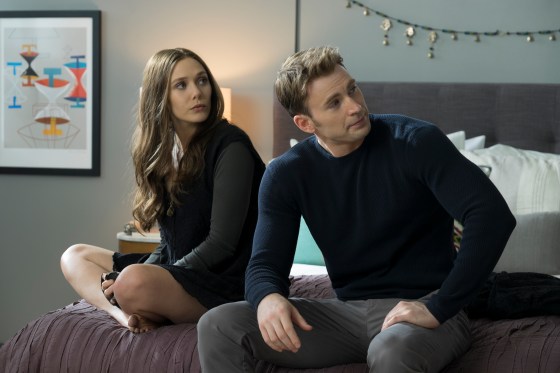
Marvel StudiosMarvel’s Captain America: Civil War..L to R: Scarlet Witch/Wanda Maximoff (Elizabeth Olsen) and Captain America/Steve Rogers (Chris Evans)..Ph: Zade Rosenthal ..©Marvel 2016

Perhaps WandaVision is headed toward that inevitable CGI battle too. The trailer certainly seems to suggest as much. But fans are going to be forced to sit patiently through a sitcom satire first. And, boy, is this show a slow burn. It’s only in the third episode that fans will begin to get a sense of what the heck is going on. Before then, the show doles out only sporadic clues and easter eggs, like a bright red helicopter with a symbol that will be familiar to those who have read the Marvel comics. It’s the mystery of how on earth this quiet, comedic series is possibly connected to the loud and operatic Marvel universe that drives the show forward. Between jokes, the audience is left wondering: is Wanda an unwitting participant in her delusion, or its creator? Is someone doing this to her or is she doing it to others?

Still, in the three episodes sent to journalists, Wanda never uses her magic for more than cleaning dishes or rectifying a social faux pas. This show could have easily had Scarlet Witch battling baddies with powers like telekinesis in every episode, flying around the picket-fence fantasy hurling energy balls at some mystical villain.

In fact, many of Marvel’s other Disney+ shows seem to be taking that route. Falcon and the Winter Soldier appears to be an action-packed continuation of the Captain America movies. And there’s precedent for simply mimicking big screen blockbusters on streaming services: The Mandalorian, the first live-action Star Wars TV show that just wrapped its second season on Disney+, is a hit exactly because it’s basically indistinguishable from its film counterparts. It commands nearly as big a budget, produces similarly expensive CGI effects and even hits on the same tropes of orphans and fathers as the films. But with WandaVision, Marvel has managed to show restraint. Audiences will just have to wait. And that is great.

In theory, Marvel fans could simply skip WandaVision and wait for one of Marvel’s 10 other shows headed to streaming services in the coming years or movies like Black Widow and Spider-Man: Homecoming 3 when movie theaters open again. But Marvel Studios head Kevin Feige has hinted that Wanda is actually central to the next phase (4, in case you’ve lost track) of the Marvel Cinematic Universe.

The events of WandaVision will have an impact of both Spider-Man: Homecoming 3 and Doctor Strange: Multiverse of Madness. The latter’s title, and Elizabeth Olsen’s inclusion in that cast, suggests that WandaVision could introduce the concept of a multiverse to the MCU. Some fans have even speculated that Wanda’s immense grief will drive her to become a villain and the main antagonist in the Doctor Strange movie.

Which is to say that MarvelVision isn’t just some one-off experiment. It’s the future of the MCU. At least, fans can hope.

Today news: All the Marvel Clues You Missed in WandaVision’s First Two Episodes


At first glance, WandaVision is a playful satire of family sitcoms of yesteryear. Wanda (a.k.a. Scarlet Witch) and Vision play house as a happily married couple dealing with mundane problems like disastrous dinner parties and pregnancy plots, all performed in front of a live studio audience. But there’s a twist: their happily ever after is almost certainly a delusion of Wanda’s, especially given that we know Vision died in Avengers: Infinity War. Wanda, who has mind-control powers, seems to have retreated into a fantasy where she and Vision can live “normal” lives in the most American setting possible: A sitcom. Each episode, set in a different decade, riffs on a beloved show like I Love Lucy or Bewitched.

Don’t be fooled: this is also a show set in the Marvel Cinematic Universe. And unlikes Jessica Jones or Daredevil, it ties directly into the Marvel movies’ central plot. After all, both Wanda (Elizabeth Olsen) and Vision (Paul Bettany) have made pivotal appearances in multiple Marvel films. So if you haven’t kept up with the movies, you may get confused. In fact, WandaVision will serve as a launching pad for Marvel’s highly anticipated “Phase 4,” which has been on hold since Disney delayed the releases of Black Widow and The Eternals because of the pandemic. Marvel Studios head Kevin Feige has said that WandaVision will set up the plots of upcoming Marvel movies like Doctor Strange: Multiverse of Madness and Spider-Man: Homecoming 3.

At its heart, WandaVision is actually a mystery series deeply rooted in Marvel lore. Why has Wanda created this world? Is someone making her do it? Why do references to HYDRA and keep popping up? What familiar Marvel character is that calling out to Wanda over the radio? The show is chock-full of easter eggs that hint at what is going on with Wanda and what the ramifications might be on the rest of the remaining Avengers.

Here are all the clues, hints and references that you may have missed.

Episode 1: Agnes as a possible Marvel villain

Kathryn Hahn is having a ball playing a nosy neighbor named Agnes in the early episode of WandaVision. But she may be prying for a reason.

In the comics, Wanda has a neighbor named Agatha Harkness. Some Redditors have pointed out that if you squish the names Agatha and Harkness together, you get “Agnes,”—which, at first glance, seems like a stretch. But other sharp-eyed fans have pointed out that Agnes is always wearing a brooch on WandaVision, just like Agatha in the Scarlet Witch comics.

In the comics, Agnes is a witch who trains Wanda. She also helps Wanda get pregnant by her husband Vision, which would be anatomically difficult because he’s an android. That happens, without Agnes’ help, at the end of the second episode of WandaVision—though, again, nobody ever explains whether Vision can have children considering he’s, well, a machine. I suppose that’s not appropriate for a family show.

Bad news for Agnes: Wanda and Agatha’s relationship in the comics does not end happily. Watch out Kathryn Hahn!

Episode 1: The Stark Industries toaster

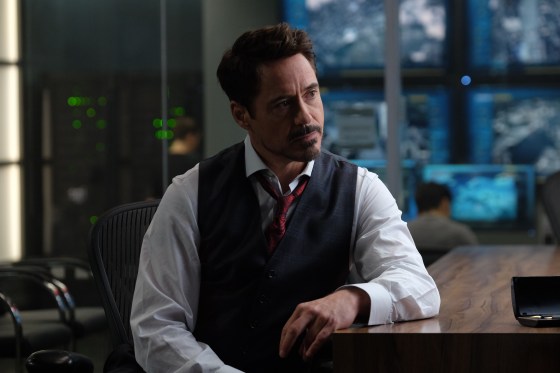
Zade Rosenthal—Marvel StudiosTony Stark/Iron Man (Robert Downey Jr.) in Captain America: Civil War

Each episode of WandaVision is broken up by a fake commercial that contains a Marvel easter egg. In the first episode, a man and a woman advertise a toaster made by Stark Industries (owned and run, of course, by Tony Stark’s family). While the toaster is making toast, it emits a beeping noise and a red light flashes. It’s surprisingly menacing for an appliance commercial.

It’s possible that the commercial is supposed to suggest that Wanda has ambivalent feelings toward Stark. Over the time they have known each other, Stark hasn’t exactly been a great friend. Stark attacked Wanda and her brother, built a genocidal AI program called Ultron that almost destroyed the world and put Wanda under house arrest because he insisted she could not control her powers.

On the other hand, Stark also created her boyfriend, Vision. Could Vision somehow be the toaster? Maybe this particular metaphor will become more clear later on.

Episode 1: “House of M” wine bottle

During their disastrous dinner party, Wanda and Vision serve a French bottle of wine called “Maison du Mépris,” which translates to “House of Contempt.” More loosely—okay very loosely—the bottle can translated to mean “House of Misery.” Regardless of the actual translation, the bottle has a large “M” on the label. So, a connection to the “House of M” comic storyline is likely.

In “House of M,” Wanda is reeling from accidentally killing some of her fellow Avengers including Vision. She deludes herself into thinking she has twin boys with Vision. When Magneto (from the X-Men) tells her the babies aren’t real, she essentially uses her mind-control powers on the entire world to trick them into believing they live in an alternate universe where her babies exist (and lots of other parts of reality have been altered as well).

WandaVision appears to be at least loosely based on this comic. As in House of M, the MCU Wanda technically killed Vision, though it was to prevent bad guy Thanos from getting a powerful gem called he Mind Stone in Vision’s head. She’s in mourning and perhaps using her powers to soothe herself. The wine bottle may hint that it is, indeed, Wanda controlling this universe, and that the creation of her dreamland may have real-world consequences.

Episode 2: A helicopter with a SWORD symbol

The colorful helicopter popping up in Wanda’s black-and-white world is the first major indication that someone from the outside is trying to break into Wanda’s fantasy. But to understand the significance of the helicopter, you have to know about SHIELD and SWORD.

In the MCU, SHIELD was an anti-terrorist organization that created the Avengers Initiative, brought all the Avengers together and (usually) gave them their orders. It was run by Nick Fury (Samuel L. Jackson) until a Nazi splinter group called HYDRA infiltrated their ranks, and SHIELD had to be disbanded. Since then, Fury has been working on a new governmental body designed specifically to respond to supernatural threats and treats from space. (We see him hanging out on a spaceship doing just that in Spider-Man: Far From Home.)

Based on what we know from the comics, this new initiative will most likely be called SWORD. It’s also logical that the agents of SWORD might use, well, a sword as their symbol. When Wanda picks up the helicopter to examine it, she spots a picture of a sword on its side. It’s likely that an actual SWORD helicopter tried to enter Wanda’s world and was somehow turned into a toy.

Episode 2: Monica Rambeau is in Wanda’s delusion

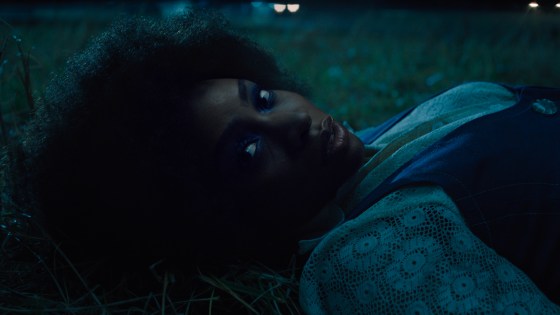
Marvel Studios

Wanda meets a new friend during the second episode. The woman, played by Teyonah Parris, introduces herself as Geraldine. However we know from IMDb that Parris is actually playing a character named Monica Rambeau.

Viewers who caught Captain Marvel have actually met Monica Rambeau before. She’s the daughter of Captain Marvel’s BFF Maria Rambeau, and the adorable little girl in that movie. Captain Marvel, as you’ll recall from hints like Captain Marvel’s Nine Inch Nails shirt, was set in the 1990s. WandaVision is set in present-ish day, after the events of Avengers: Endgame. It looks like Monica is now all grown up.

It’s likely that Monica is an agent of SWORD or some other do-gooder trying to help Wanda. After all, her godmother is Captain Marvel. It would be very weird if Monica grew up and decided to turn all evil. When Monica and Wanda first meet, Monica admits, “I don’t know what I’m doing here.” It’s possible she was either sucked into Wanda’s fantasy or was sent on a mission but doesn’t know how to negotiate Wanda’s predicament. We know from the trailer she will return again in later episodes.

Episode 2: “The devil is in the details”

Marvel StudiosKathryn Hahn in WandaVision

One of Agnes’ tossed off lines may have a deeper meaning. During the Mad Men-esque meeting of the housewives to prepare for the talent show in Episode 2, the Queen Bee of the group quips, “the devil is in the details.” Agnes retorts, “That’s not the only place he is.”

It may be a joke, but many Marvel fans have theorized that the Marvel version of the Devil, Mephisto, will show up in WandaVision. Without spoiling too much, Mephisto is a major villain for Wanda in the early Marvel comics and even uses his magic to enhance her delusions. Agatha Harkness plays a role in the conflict between Wanda and Mephisto too.

If Mephisto doesn’t actually show in WandaVision, it’s likely at least that this line is dropped as a nod to Marvel diehards.

Episode 2: Jimmy Woo on the radio

Ben Rothstein—Marvel StudiosJimmy Woo (Randall Park) in Ant-Man and the Wasp

While Wanda is cleaning up after the talent show meeting, she hears the song “Help Me Rhonda,” which sounds an awful lot like “Help Me Wanda,” come on the radio. A static-y voice interrupts the song calling out to Wanda: “Who is doing this to you?”

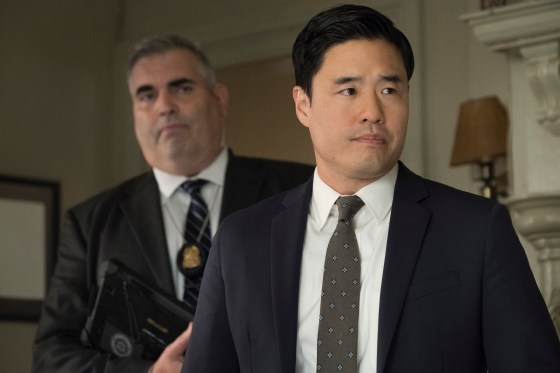
Keen-eared fans will recognize the voice of Randall Park, who plays Agent Jimmy Woo in Ant-Man and the Wasp. In that film, he was responsible for making sure Ant-Man didn’t violate his parole. It seems now that Jimmy is moving on up in the world—it’s likely that he’s an Agent of SWORD or some other organization trying to reach Wanda.

Episode 2: A commercial for a HYDRA watch

Marvel Studios Paul Bettany as Vision and Elizabeth Olsen as Wanda in WandaVision

The same man and woman from the first commercial reappear in a second one, this time advertising a watch called a Strucker with the HYDRA octopus symbol on it. It ticks, well, menacingly. (There’s a lot of menace in these commercials.)

Recall that Wolfgang von Strucker was the name of the HYDRA leader who experimented on Wanda and her twin brother Pietro, torturing them with the Mind Stone—yes that same Mind Stone that’s later put into Vision’s head—until they gained superpowers. Ultron killed Wolfgang, so it’s unlikely that he is the one forcing Wanda into this dreamland or hurting her directly in any way.

But it’s possible that HYDRA is hurting Wanda in some way, perhaps trapping her inside her own mind. (Hence Jimmy Woo asking, “Who is doing this to you?”) Alternatively, the commercials could represent how Wanda is haunted by her past. She’s trying to repress memories of being held captive by HYDRA. The trailer has shown flashback scenes to when Wanda received her powers.

The clicking tock could either signal that Wanda has a limited amount of time to live in this fantasy or that HYDRA is coming for her.

Episode 2: The beekeeper with a SWORD symbol

A sword symbol keeps invading Wanda’s reality. First the helicopter. Now a man in a beekeeper costumer at the end of the episode. Let’s go ahead and assume that, like the helicopter, the man did not look like this when he entered Wanda’s reality. Maybe he was wearing a Hazmat suit and her mind changed it to a beekeeper outfit to better fit the suburban milieu.

The man climbs out of a manhole, as if sneaking into her dream. It’s unclear if Wanda recognizes the symbol specifically or is just scared by this weird breech into her subconscious. But she simply responds to his presence with a “no” and somehow rewinds time.

Notably, the man interrupted Wanda’s fantasy just as she had discovered she was suddenly and miraculously around four months pregnant and showing, despite having not been pregnant moments before. (I don’t know how an android and a witch make babies, but I’m pretty sure this isn’t it.)

Wanda asks Vision, “Is this real?” when they’re interrupted by a bashing sound seemingly created by the beekeeper. After she rejects the beekeeper from her reality, she returns to that moment as if to make sure it plays out perfectly. She asks Vision (again), “Is this real?” And he replies that it is.

 
Copyright 2009 Great Movies Database News. All rights reserved.
Free WordPress Themes Presented by EZwpthemes.
Bloggerized by Miss Dothy