RSS
Hello! Welcome to the Great Movies Database.

Today news: Gabrielle Union: The Hard Truth About My Surrogacy Journey


In 2016, my doctor, Kelly Baek, a no-nonsense reproductive endocrinologist in L.A., gave it to me straight: “Your best chance for a healthy baby would be surrogacy.”

I had been through an adenomyosis diagnosis and more miscarriages than I could confidently count, and all I could do was nod. I was not ready to do that. I wanted the experience of being pregnant. To watch my body expand and shift to accommodate this miracle inside me. I also wanted the experience of being publicly pregnant. I would shake off the distrust society has for women who, for whatever reason—by choice or by nature—do not have babies. I had paid the cost of that for years, and I wanted something for it.
[time-brightcove not-tgx=”true”]

I held out for a year after Dr. Baek suggested surrogacy, and instead chose to endure more IVF cycles and losses. Everyone comes to the decision differently. Near the end of that year—that hopeful and hopeless year—I had a new plan to take Lupron, which basically quiets the adenomyosis. Dr. Baek told me I would have a 30% chance of bringing a baby to term. But the side effects of Lupron can be intense: you’re basically throwing your body into early menopause and you can break bones very easily.

It was something my husband said that changed my mind. I told him I wanted to try the drug. Dwayne was quiet, then said, “You’ve done enough.”

Read More: Why We Shouldn’t Be Afraid to Talk About Our Miscarriages

There was a desperation dripping off him that I couldn’t ignore. A desperation of wanting things to be right with us.

In 2013, before we were married, Dwyane had a baby with another woman. It should go without saying that we were not in a good place at the time that child was conceived. But we were doing much better when he finally told me about the pregnancy. To say I was devastated is to pick a word on a low shelf for convenience. There are people—strangers I will never meet—who have been upset that I have not previously talked about that trauma. I have not had words, and even after untold amounts of therapy I am not sure I have them now.

“You’ve done enough,” he said.

I looked at D with an instantaneous white-hot rage. I was fighting with my husband about what was best for my body? Did he really think that surrogacy and a baby was our chance to set it right? To rebalance? I said coolly, “You’re going to be the voice of reason now? Really?”

He looked me in the eye. “As much as we want this baby, I want you,” he said slowly. “We’ve lost too much in our relationship for me to be okay with encouraging you to do one more thing to your body and your soul.”

I read those words now and hear them again. I didn’t receive this as concern at the time. It sounded like an acknowledgment of failure. Because at that point I would have sold my soul to get out of the endless cycle of loss. What was the going rate for souls? What was mine worth, anyway? The experience of Dwyane having a baby so easily—while I was unable to—left my soul not just broken into pieces, but shattered into fine dust scattering in the wind. We gathered what we could to slowly remake me into something new. There was no way to disguise where I’d been glued back together.

Clearly, my feelings weren’t originating from a healthy place. So much of what made the decision so difficult was that if I didn’t submit to a surrogacy, then I was convinced I needed to let Dwyane go. Even if he didn’t want to, I had to let him find someone who could give him what he wanted.

But I loved him. Each day, he had worked to be forgiven, and I had chosen to do so. And part of this journey of making peace with our love is also making peace with ourselves. I had come to accept that without that awful collision in our lives—this Big Bang moment in our relationship that set our galaxy as we knew it—we wouldn’t have become the individuals we wanted to be. The me of today would not have stayed with him, but would I be who I am now without that pain? I remember a small voice in my heart telling myself to leave, but my fear of public humiliation was so great that I didn’t take my own advice.

In the aftermath, I invested so much time in making peace between us that I gave myself absolutely no self-care. And now there I was, still putting my life second to some shared mission. Why was I so willing to risk myself for a chance? If there was another way for me to bring my baby into the world, and have my health, why was it so hard for me to make peace with that?


For weeks, I went down a rabbit hole of books, surrogacy message boards and conversations with our fertility agency. At the top of the surrogate food chain were married, white, American women who have their own kids. The belief is that if they are married, they have a built-in support system, and if they have more than one child, there’s proof they can do the job. On the message boards, people can be anonymous, so they rank surrogates by race. I got the sense a lot of white families-to-be were more comfortable with brown people as surrogates—Latina and South Asian—who were often classified as “breeders.” Now, I am Black, and I am used to hearing how people speak of women of color, but this was some Handmaid’s Tale sh-t.
We chose the most ethical agency we could find, and answered most of their questions about prerequisites with “We don’t care.” Religion, active lifestyle, diet. Two months later, in early December, we were presented with a surrogate who seemed to check all the boxes. We were introduced over the phone, but the conversation was made awkward by the fact that we couldn’t reveal our identities to protect the anonymity of both parties. She said all the right things about how she experienced the gift of life having her own kids, and wanted to give this gift to others. But I was cautious, wondering if people were prepped to say that.

After she was cleared by Dr. Baek, we agreed to meet in person in her office. As I got dressed that morning, I realized this was like the best and worst blind date ever. I wondered what outfit said, “I’m grateful, but I’m also not a loser. And I’m not some actress, you know, farming out her responsibilities.” This woman and her husband had the power to look at me and say, “Ennh . . .” I needed her to like me and accept me. Accept us, since I was also standing in for Dwyane, who was in the middle of the season. I was very aware that the surrogate and her husband didn’t know we were Black.

I got there early. Dr. Baek put me in a small office, and the liaison from our agency arrived. “Are you comfortable?” she asked. I smiled and nodded, unable to put words to the feelings. There had been so much fear and failure, but now there was a vague relief that I was finally here. And something else: anticipation. I had not let myself have that for so long that I had difficulty recognizing it.

The door opened. Like a blind date, you look everywhere at once, knowing you are being looked at, too. The first thing I noticed was a nose ring. Oh, I thought, she’s a cool-ass white girl.

And then I noticed her notice me. Her eyebrows shot up. “Oh, ho ho ho,” she said. There was an excitement to her voice, and I smiled. “This is such a trip. I have your book on hold at four different libraries.”

I have never been done wrong by readers. I started laughing, and we hugged. “So, I guess now I can get a copy, huh?” she joked.

“Yeah,” I said, meaning yes to everything. Her name was Natalie, and when her husband came in I saw they matched. Free spirits with an aura of goodness to them. They had an easy rapport and were affectionate with each other. I hadn’t known that would be so important to me, knowing that she had a partner in this. I called D and put him on speaker, and as they directed their attention to the phone, I looked up at them. You’re those people, I thought. You really want to help others.


When we got the positive pregnancy test in March 2018, my first thought was, “Wow. Sh-t. This is really happening.” The due date was Thanksgiving.

We’d even begun to pick out names. When I was in my 20s and thought my life was going to be a little different, I’d begun keeping lists of baby names. There was one name I saw at the end credits of a TV show or movie: Tavia. That would be pretty, I thought, with a K. Kavia. That name made it onto every hopeful list I kept. Dwyane knew the list by heart, too, and we both felt it. This hope, this starburst, was her.

Near the end of the first trimester, we all returned to Dr. Baek’s office, this time with Dwyane, for the first 4-D ultrasound. Two couples crowded into a room built for one, awkward in our affection for each other, yet still feeling like strangers. This was the first time Dwyane had met Natalie and her husband in person, and our hugs were those of people who did not know each other but had survived something as a unit. She was showing me her stomach, turning to the side, cupping the weight of my own maternal ineptitude. This growing bump that everyone thought I wanted to see was now a visual manifestation of my failure. I smiled, wanting to show I—we—were so happy and grateful. But part of me felt more worthless.

Natalie lay down for Dr. Baek to pass the ultrasound wand over the bump. “There she is,” she said. And she was. There. Here. This very clear little baby in there. Her big-ass head, her spine, her little heart pumping, pumping, pumping. Determined to live. It was suddenly incredibly real. Dwyane took my hand, and there was so much happiness on his face, I lost it. My cry was a choke stopped up in my throat, tears streaming down.

It was grief. I’d had so many miscarriages. I say the following with the caveat that I am steadfast in being pro-choice. I was on a fertility journey at 44. The smallest cell was weighted with the expectation of life. A zygote was a baby, just on potential alone. When one of my eggs was examined, that was a baby. When Dwyane got a sperm analysis, that was a baby. Every swimmer was our baby. But when I miscarried in the first trimester, I never thought I had lost a baby baby. I had never let it count. Looking at the screen, I understood how many potential babies I had lost. That’s why I was crying. A floodgate of grief and sorrow overcame me, threatened to drown me.

I saw my husband so happy, and I was not a part of it. I felt a chasm widening between us. I was embarrassed to be crying so much, but everyone was looking at me with smiles and nods. They thought these were tears of gratitude. The awe of witnessing the start of life. I was reliving death. Of course I was grateful, it would be impossible not to be. But what I was grateful for was that this life might be spared. That this heartbeat might continue, beat strong for decades, long after my own stopped. So many had stopped inside me.

I allowed the misreading of my tears. Crying showed that I was a good mom. My first performance in competitive mothering. Nailed it.


I was on the other side of the world from my daughter when I began to let myself look forward to her arrival. We were in Beijing on business for Dwyane and brought friends with us. It was the end of July, the five-month mark we had never made it to. Dwyane’s confidence was something to behold and envy. He was so certain she was going to make it that we told our friends. After my first miscarriage, I had never ever told people when we were expecting. Even this felt dangerous. The words were out of my mouth to my friends and I thought, What the f–k did I just do?

Dwyane broke out whiskey and cigars, and he announced that he wanted to get a tattoo of her name—we’d decided it would be Kaavia James—on his shoulders that night, written where his Heat jersey would cover it. I was terrified of the permanency. As he sat before me with his shirt off, I placed my hands where her name would be, and kissed the top of his head. I thought of something he would sometimes say to himself and to others: “My belief is stronger than your doubt.” He usually said this when he was counted out after an injury, or walking away from a deal everyone thought he was crazy to turn away. But this was different. I didn’t know if his belief was strong enough for both of us.

Read More: ‘We Had to Shut Up and Listen.’ What Gabrielle Union and Dwyane Wade Learned About Equality From Their Daughter Zaya

Then, a week after my late-October birthday, I was on my way to the gym before work. It was 11 a.m., and I’d been on the set late the night before. My phone rang. I looked down and saw Natalie’s name.

“My water broke,” she said.

“Hunh?”

I had Kaavia James’s due date in my mind as set. She would be here at Thanksgiving. I was just getting used to it being November.

“I’m headed to the hospital now,” she said. “Okay!” I said. “Okay.”

I called D. He was in Miami, and in the first few weeks of his final NBA season. He’d had a plane on standby for just this moment, and called the pilot right away. I called my mom in Arizona, and she got on the first flight. What happened next—more phone calls, a trip home for my pre-packed bag, booking a hotel room near the hospital—happened fast. My mom got there before Dwyane. D arrived, followed by the baby nurse and her crew.

And then Natalie proceeded to go into labor for 38 hours—so long that Kaavia James was in danger. The doctor had to do an emergency C-section because the umbilical cord had become tied around Kaav’s ankle. Now that I am Kaavia James’s mother, I know that she tied it herself because she was simply over it.

I definitely didn’t know how C-sections work. Turns out it’s all kinds of rough. But it was fast, and suddenly the doctor was holding her up for our wide-eyed gaze.

“Oh my God,” I said. The room was festive almost, people saying over and over, “Congratulations.” Just as quick, the doctor placed her on a little exam table and asked her name.

“Kaavia,” I said, my voice a choke.

This baby, given a name written on a wish list for decades, then tattooed on her father’s shoulders. She was loved even as an idea. My body seized in a full release of every emotion. Relief, anxiety, terror, joy, resentment, disbelief, gratitude . . . and also, disconnection. I had hoped that the second I saw her, there would be a moment of locking in. I looked over at Natalie and her husband. There was a stillness to them. I looked at Kaavia James on the table, and then back at them. It took all of us to create her, so I wanted to share this time with them.

The nurses took Kaav to the newborn nursery. Dwyane, my mom and I all reassembled in a hospital room, waiting for them to weigh Kaav and clean her up. I put on a surgical gown for modesty so I could do skin-to-skin bonding with her. My mother and D were crying, our surrogate was crying, our baby nurses were crying, and I was a mess. Then the door opened and Kaavia James was brought into our lives.


So much time has passed. So many firsts. Yet the question lingers in my mind: I will always wonder if Kaav would love me more if I had carried her. Would our bond be even tighter? I will never know what it would have been like to carry this rockstar inside me. When they say having a child is like having your heart outside your body, that’s all I know. We met as strangers, the sound of my voice and my heartbeat foreign to her. It’s a pain that has dimmed but remains present in my fears that I was not, and never will be, enough.

And Dwyane leaves me with another riddle that has no answer. I can never know if my failure to carry a child put a ceiling on the love my husband has for me. Yes, I am Baby Mama number three, a label that is supposed to be an insult. But is the injury not that label but instead the asterisk next to my name in the record? The asterisk denotes that the achievement is in question. “She didn’t really earn the title.”

If I am telling the fullness of our stories, of our three lives together, I must tell the truths I live with. And I have learned that you can be honest and loving at the same time.

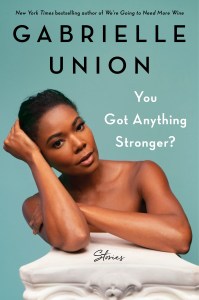
Adapted from You Got Anything Stronger? by Gabrielle Union. Copyright © 2021 by Gabrielle Union. Reprinted by permission of Dey Street Books, an imprint of HarperCollins Publishers.

Today news: How The Matrix Resurrections Trailer Evokes the Franchise’s First Movie in Mysterious Ways


We’re finally returning to the Matrix. The first trailer for The Matrix Resurrections, the much anticipated fourth entry in the seminal series, dropped on Thursday, and in classic Matrix fashion, it raises more questions than it offers answers. All the better that the plot remain a mystery before the film’s premiere in December.

What we do know is that Resurrections parallels the original Matrix film in many ways. In the trailer, we find out that Keanu Reeves‘ Neo and Carrie-Anne Moss’ Trinity are back inside the Matrix. Considering that both of these characters died in the third film, why they are still alive or whether these are even the same characters we met back in 1999 is up for debate. More curious still, Neo and Trinity both seem to have aged, while other characters in the film look to be younger versions of the characters we met in the original trilogy.
[time-brightcove not-tgx=”true”]

If this is the same Neo from the original trilogy, he seems to have forgotten that he is the chosen one. He will need to journey back down the rabbit hole again. To that end, it looks like we will get new riffs on the iconic red pill/blue pill scene and the dojo scene, among other nods to the original film.

Fans are already excited by the prospect of returning to many of the most famous moments from the original film. But knowing filmmaker Lana Wachowski, co-creator of the original Matrix trilogy along with Lilly Wachowski, the parallels between the two movies don’t just exist for the sake of fan service. They’re almost certainly making a larger philosophical point. From this trailer alone, it seems Wachowski, who is co-writing and directing Resurrections, is interested in exploring themes like how technology has gained an even greater hold over us since the original trilogy debuted.

Here is everything that we know about Matrix Resurrections so far.

The Matrix Resurrections trailer breakdown

Warner BrosKeanu Reeves in the trailer for Matrix Resurrections

In the trailer, we meet an older Neo, sporting his John Wick haircut, living within the Matrix under the name Thomas Anderson (his name from the first film before he unplugs from the Matrix and becomes Neo). He doesn’t seem to be aware that he is living inside a simulation. He is leading a normal, if depressed, life, seeing a therapist and popping dozens of blue pills (more on those later). He sees a black cat, just as he saw one when he learned about deja vu in the original film.

Neo seems aware that something is amiss, telling the therapist, played by Neil Patrick Harris, “I’ve had dreams that weren’t just dreams.” As he says this, we see a shot of Neo walking along a street with the signature Matrix green coding scrolling along it. We then see flashes of several action shots, including one of Neo being unplugged from the Matrix.

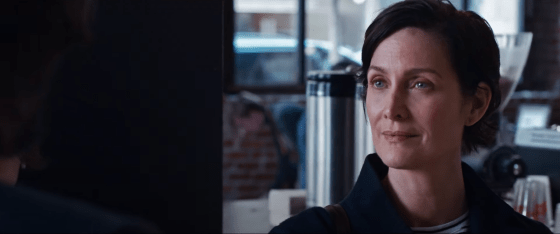
Fans will recall that both Neo and his love Trinity died in the third Matrix film, Matrix Revolutions. Yet somehow they’re both still alive in this trailer. Neo encounters Trinity in a coffee shop, and the two shake hands. Trinity asks if they’ve ever met before. It seems like they have some memory of their past that has been erased.

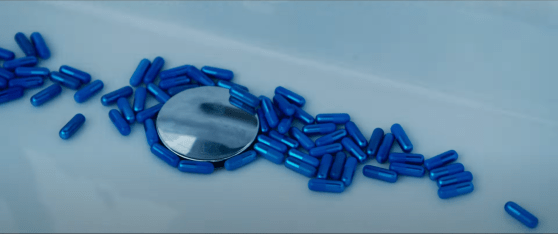
And here come the pills. Neo is popping blue pills like candy. Even the most casual Matrix fan will recall that in the first movie Morpheus (played by Laurence Fishburne) offers Neo a blue pill and a red pill. The blue pill would return him to his normal life in the Matrix and help him forget he was living in a simulation. The red pill would take him further down the “rabbit hole,” and reveal the truth of his existence. Neo chooses red. But now he’s popping blue pills. They may be just a symbol of Neo trying to escape his depressing reality (and perhaps a commentary on our reliance on prescription medications) or these may literally be the pills that keep him from remembering what happened when he left the Matrix, whether he knows that’s what they’re doing or not.

Warner Bros.Keanu Reeves in Matrix Resurrections

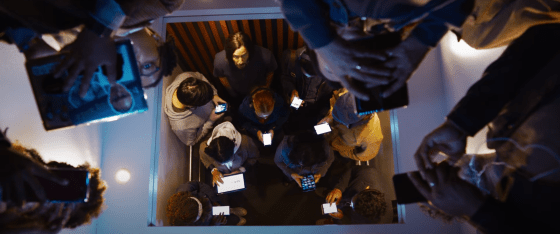
We get a shot of a bunch of people in an elevator staring at their phones while Neo stares upwards, obviously disturbed. Wachowski is no doubt nodding to the fact that we are now, more than ever, dependent on machines and technology, far more so than when The Matrix premiered in 1999. And while at the end of the original Matrix trilogy, the humans and machines had come to a tentative peace in their war against one another, the machines may have subtly regained more control than humans have even realized. Thanks, iPhones!

We also get a quick shot of the book Alice in Wonderland, a movie heavily referenced in the first film. In that movie, Morpheus offers to take Neo “down the rabbit hole,” just as Alice started her adventure into a topsy turvy world. White rabbits kept popping up in the movie. In the Resurrection trailer, the song “White Rabbit” by Jefferson Airplane chronicles Alice’s choice between two pills early in her journey—one that would make her big and another that would make her small—a nod to Neo’s own choice between two pills. We also get a reference to Alice in Wonderland’s sequel, Through the Looking-Glass, in the next shot as Neo looks in a mirror and sees what looks to be an older version of himself. Perhaps that’s his future self or true self or someone entirely different? A little bit later in the trailer we see a woman played by Jessica Henwick sporting a rabbit tattoo on her shoulder. A character named Dujour also had a rabbit tattoo in the original movie.

Warner Bros.Keanu Reeves and Yahya Abdul-Mateen II in Matrix Resurrections

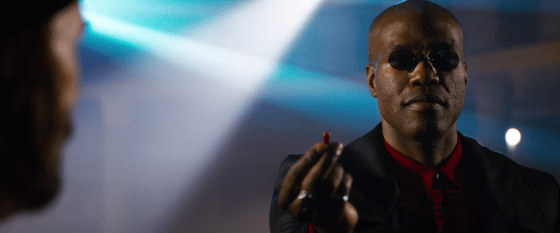
And here’s where things get interesting. Yahya Abdul-Mateen II, wearing Morpheus’ signature sunglasses, holds up a red pill and blue pill to Neo and says, “Time to fly.” Obviously, this scene mimics Neo’s fateful choice in the first film? Is Abdul-Mateen playing Morpheus? Is this whole movie a reboot or a sequel or a prequel or none of those things? (More on those questions later.)

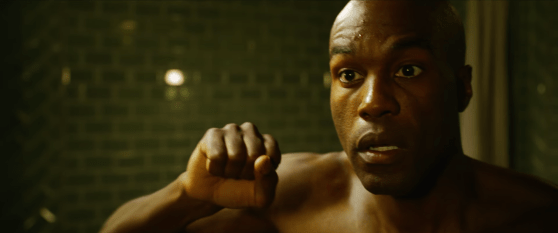
Henwick’s character then tells Neo that if he wants the truth, he’s going to have to follow her, and they walk through (you guessed it) a mirror or looking-glass. Then Abdul-Mateen’s character and Neo speak in a dojo, a recreation of another famous scene from the original film in which Reeves intoned, “I know kung fu” in the most Keanu Reeves way possible. This time around, Abdul-Mateen tells Neo that the only thing that matters to him is “still here.” We see a shot of Trinity with the Matrix code running down her face. So, it seems, Trinity is alive and perhaps exists in the Matrix and now Neo has to fight to save her. “You don’t know me,” says Neo, to which Abdul-Mateen’s character replies, “No?” suggesting, again, that he may be Morpheus or a different version of him, someone who does know Neo well. The two fight and Neo creates so much energy with his fists that he creates an explosion.

Warner Bros.Jonathan Groff in the Matrix Resurrections trailer

Now we get a series of action shots, among them: Our first look outside of the Matrix; Jessica Henwick pulling off some very Trinity-esque leaps and bounds within the Matrix; a man pointing a gun at Neo; another man, likely an agent like Agent Smith, taking over a police officer’s body; Trinity plugged into the Matrix; Trinity in that same coffee shop we saw earlier screaming; Abdul-Mateen’s character putting his fingers through a looking-glass and pulling back, scared; Abdul-Mateen’s character and Henwick’s character running up walls and dodging bullets; Neo rerouting a missile with his powers; and Neo and Trinity leaping off a building together, hand in hand.

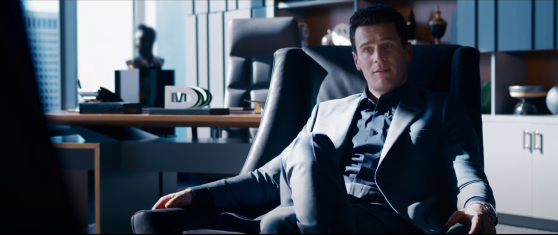
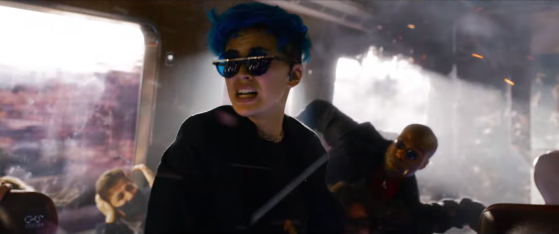
Finally, we meet a character played by Jonathan Groff. “After all these years, going back to where it all started,” he says to Neo, “back to the Matrix.” It’s unclear at this point if Neo does or does not know the Matrix exists. But Groff has a malevolent grin on his face. He seems to be playing a Mr. Smith-type character, if not Mr. Smith himself. Though a teaser for the movie on WhatIstheMatrix.com shows his mouth shut so he can’t speak in the same way Neo’s was in the original film, perhaps suggesting he’s not the one in control.

What happened at the end of Matrix Revolutions?

Warner Bros.Carrie-Ann Moss in the trailer for Matrix Resurrections

The last time we saw Neo, he had sacrificed himself. In the first Matrix, Neo discovers that what he perceives as the real world is actually the Matrix, a space controlled by sentient machines to subdue humans. He breaks out of the Matrix and discovers that he is “the One,” a prophesied powerful figure. But he’s hunted down by Agent Smith (Hugo Weaving), a program designed to police humans within the Matrix.

By the third movie, Matrix Revolutions, Agent Smith has grown ultra-powerful by absorbing the other beings and has designs to conquer the Matrix himself. Neo teams up with the machines to defeat Agent Smith and returns to the Matrix for a final showdown. During that fight, Neo sacrifices himself so that both he and Agent Smith will die. In his final moments, we see Neo holding his arms out in a Christ-like formation, light bursting from him.

Neo’s death reboots the Matrix. This has happened before—Neo learns that the Matrix has restarted over and over again. But because Neo created an alliance with the machines, it’s implied that the new world will be a more cooperative and peaceful one. This trailer suggests that may not have been the case. At the end of the movie, when asked whether she believes the peace between machines and humans will last, the Oracle responds, “As long as it can.”

Now, it seems that both Neo and Trinity are back in the Matrix—at one point in the trailer, we see Trinity plugged in. Does that mean that humans don’t have the free will to choose whether to live inside or outside the Matrix after all? Or has Trinity changed her mind about living outside the Matrix—maybe it wasn’t all that it was cracked up to be. Or did this version of Trinity never leave the Matrix in the first place?

Is The Matrix Resurrections a prequel, sequel or reboot?

Warner Bros.Jessica Henwick and Yahya Abdul-Mateen II in Matrix Resurrections

We don’t know, and that’s the fun of it!

When Neo rebooted the Matrix, did he somehow wind up further back in time with younger or parallel-universe versions of Morpheus, Trinity and Agent Smith? Are these totally new characters and people repeating the same actions we know from the first Matrix movie over again? Is Neo even Neo yet or in this film has he not yet discovered that he’s the Chosen One? Or is he taking the blue pills to forget?

This trailer is clearly hiding…something. And fans will have several months to theorize about how Neo wound up back at square one.

How are Neo and Trinity still alive?

Warner Bros.Carrie-Ann Moss in the Matrix Resurrections trailer

It’s unclear. Both died in the third movie, Trinity in a hovercraft explosion and Neo by sacrificing himself in a fight to defeat Agent Smith.

We do know from the second movie, Matrix Reloaded, that Neo was not unique. He was, in fact, a part of the Matrix’s program and the sixth anomaly within the Matrix. So perhaps the Neo we see in the Matrix Resurrection trailer is a seventh, eighth or ninth anomaly.

But the title seems to contradict that theory. The Matrix was a metaphor for many things—die-hards are still debating what, exactly, it all means—but like Superman and Harry Potter and many other popular heroes, Neo is a Christlike figure who must sacrifice himself for the greater good. And then, inevitably, he’s resurrected. So perhaps this is the same version of Neo, brought back to life somehow by the Source. It looks like we’re now seeing that post-resurrection life, but it’s not the happy or simple ending other stories would have us believe it might be.

Where is Morpheus?

Warner Bros.Yahya Abdul-Mateen II in the trailer for Matrix Resurrections

The original Trinity played by Carrie-Anne Moss appears in the trailer—but is she real? A memory? A specter? A vision of the future? Our original Morpheus, however, does not. Laurence Fishburne has insisted over and over again that he was not invited back to appear in the fourth Matrix installment, but that hasn’t stopped fans from theorizing that he will make a surprise appearance.

What’s with the pills?

Warner Bros.

Ah, the red pill and the blue pill, symbols that have lasted literal decades and become common parlance on the Internet to describe all manner of cultural, political and psychological phenomena.

Well, they’re back. According to a teaser video, those pills are called Ontolofloxin. This is likely a reference to Ontology, a branch of philosophy that deals with metaphysics and the nature of being—which is all rather on brand for The Matrix. The fact that Neo is popping these pills suggests that he is having something of a metaphysical crisis.

Today news: Tony Leung Captivates in Shang-Chi. But His Favorite Film Is the One He Hasn’t Done Yet


You wouldn’t be able to tell from watching Shang-Chi and the Legend of the Ten Rings that Tony Leung took just two weeks to prepare for his fight scenes. In Marvel’s latest superhero film, the acclaimed Hong Kong star moves with ferocity and agility, swiftly dealing blows to his opponents in one artfully choreographed spar after the next. Leung had brought up hand-to-hand combat in an early meeting with director Destin Daniel Cretton. “I asked him, ‘Do I have to fight?’ He said, ‘No, you don’t have to fight, you have the rings so they would do all the CGI,’” Leung recalls. The corners of his eyes crinkle in a smile as he lifts up both forearms, where his character, Wenwu, would wear the 10 all-powerful bands that lend him supernatural strength and immortality.
[time-brightcove not-tgx=”true”]

It’s noon in Hong Kong as we speak over Zoom, a few days ahead of Shang-Chi’s theatrical release on Sept. 3. “It ended up that I had to do a lot of fight scenes,” Leung says. “Luckily, I did a lot of action movies before in my acting career, so it was not too difficult.”

It takes just a quick glance at Leung’s extensive portfolio, spanning four decades, to see what he’s talking about. Take Hard Boiled, the 1992 Hong Kong film in which Leung plays an undercover cop battling in a hospital shootout with explosions galore. Or Hero, the Chinese wuxia movie released 10 years later, in which he stars as an assassin dueling in acrobatic sword fights. There’s also the 2013 drama The Grandmaster, featuring Leung as the renowned martial artist Ip Man simultaneously facing 10, maybe 20 men in physical combat.

The key distinction with his latest action film is that it marks the 59-year-old actor’s Hollywood debut. In Shang-Chi, Leung’s Wenwu is the leader of the terrorist group Ten Rings and the estranged father of the eponymous superhero (Simu Liu). The movie, which shattered Labor Day weekend records and grossed more than $94 million across its four-day opening despite the persistence of the Delta variant, follows the titular character as he faces off against his father and the 10 rings.

Wenwu is not a typical antagonist, and his layered story is part of what drew Leung to the role. “I think Marvel is trying to take a different approach with this supervillain,” he says in an interview conducted partially in English and partially in Cantonese with the assistance of a translator. “They want to explore the human side, not the evil side of this character.” Stricken with grief after the death of his wife Jiang Li (Fala Chen), Wenwu is bent on restoring unity to his family by any means. He is undoubtedly the main force of opposition to Shang-Chi’s endeavors—but he’s also a tormented dad just trying to do the right thing.

From Hong Kong superstar to Marvel supervillain

In some ways, it’s not surprising that Leung selected this multifaceted character to be his first Hollywood performance. In a 2000 interview, TIME asked the veteran actor if he received movie offers following his Best Actor win for Hong Kong director Wong Kar-wai’s In the Mood for Love at the Cannes Film Festival earlier that year. “I’ve had some from the U.S. and some from Europe. But the characters on offer are very restrictive and I don’t see why they have to be,” Leung said. “That’s why I prefer to work in Asia. You get more space to act, more roles.”

A household name in Asia, Tony Leung Chiu-wai starred in a number of Hong Kong television serials in the 1980s before regularly playing lead roles on the big screen. Leung is perhaps best known for his performances in Wong’s films, including playing a lovesick police officer who slowly opens his heart again in Chungking Express (1994) and an enamored journalist who reins in his romantic feelings in In the Mood for Love. Beyond those collaborations, Leung has left an indelible mark in Asian cinema through roles like a death-mute photographer in Hou Hsiao-hsien’s 1989 Taiwanese drama A City of Sadness, an undercover agent in Andrew Lau and Alan Mak’s 2002 Hong Kong crime thriller Infernal Affairs—later remade into the Oscar-winning The Departed—and a high-ranking official who is the target of an assassination plot in Ang Lee’s 2007 Lust, Caution. At home in a number of genres, Leung adds depth to his characters through the subtlest changes in his facial expressions. It’s partly why he’s widely regarded as the actor with “eyes that can speak” in Asia. “Every look he gives contains a thousand stories,” Accented Cinema puts it in a recent video essay.

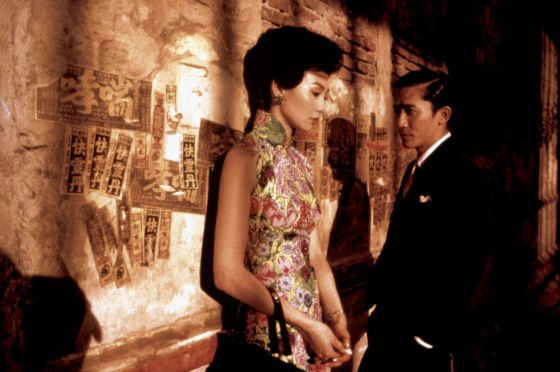
Maggie Cheung and Tony Leung in In The Mood For Love, 2000.
Miramax/EverettMaggie Cheung and Tony Leung in In The Mood For Love, 2000.

Leung says that one emotion in particular was key to his portrayal of Wenwu. “Anger would be the biggest message through his eyes,” he explains. But it’s not uninhibited rage that viewers see in the eyes of Wenwu. It’s a quiet fury rooted in pain. “From his life experiences, he’s gone through so much and he really became the narcissist that he is,” Leung says. Though Wenwu lived a thousand years thanks to the power of the rings, the actor says the character never experienced love before meeting Li—who would become the mother of Shang-Chi and his younger sister Xialing (Meng’er Zhang). “Finally meeting Li, that would really bring out the romance that was unheard of for the character,” he says.

As for the character’s relationships with his children, there is a marked contrast between Wenwu’s interactions with Shang-Chi and Xialing. “I definitely feel the traditional legacy passed towards the son,” Leung says. “In Mandarin, we would say zhong nan qing nü (重男輕女), that’s the kind of dynamic that they have in the family.” The Chinese idiom refers to a gender bias that promotes a patriarchal worldview. In the film, Wenwu’s attention is largely focused on the titular character while Xialing remains in the background—until she boldly steps into the spotlight herself and joins the family tradition of martial arts.

Read more: Shang-Chi and the Legend of the Ten Rings Made Me Feel Seen Like No Other Hollywood Blockbuster Has

Significance of martial arts-inspired action scenes

The fight choreography for Marvel’s first Asian-led superhero film is based on martial arts. Leung says one particular action sequence was reminiscent of his past projects. “My first scene is fighting in the bamboo forest,” he says, referencing the dance-like duel between Wenwu and Li in the pair’s first encounter. “It reminds me of my early movies in my acting career, the costume movies,” Leung adds.

In Mandarin, the term gu zhuang (古裝) refers to period costumes that actors wear in historical films and series. Leung has starred in a number of these projects, including playing a near-blind swordsman in Wong’s 1994 film Ashes of Time, which co-starred his wife, actor Carina Lau. The movie, along with many earlier TV shows Leung appeared in such as The Duke of Mount Deer (1984) and New Heavenly Sword and Dragon Sabre (1986), were adapted from or inspired by Louis Cha’s wuxia novels. Cha, also known by his pen name Jin Yong, was influential in shaping this genre of Chinese fiction featuring martial artists with superhuman abilities.

It’s no coincidence that the element of fantasy signature to wuxia sequences is reflected in much of Shang-Chi’s action choreography, from Wenwu’s face-off in the bamboo forest to hand-to-hand combat elsewhere. In an interview with Empire, Cretton said that in addition to drawing inspiration from Jackie Chan, the film’s choreographers created “beautiful wuxia-style fight scenes.” Liu has also spoken of how the movie incorporates multiple styles of martial arts. “Tai chi, which is very, very flowy,” he said in a Marvel featurette, and wing chun, which he calls “more combative,” as well as a range of regional styles.

Wenwu’s fighting style also incorporated many influences. Leung says that, on set, he suggested a combination of martial arts types for his character. “It’s like MMA [mixed martial arts,]” Leung explains. “[Wenwu] has had a long history of life experience so I felt like this character deserves variations of different kinds of martial arts.”

What success means to Leung

For Leung, it’s fate that brought the actor to the Marvel Cinematic Universe and, more broadly, Hollywood. Asked about his thoughts on building a career in Hollywood, he says, “I believe in destiny.” He explains: “You can’t force things to happen. If it happens in Hollywood, great. But then at the same time, leave it up to destiny to see what happens next.”

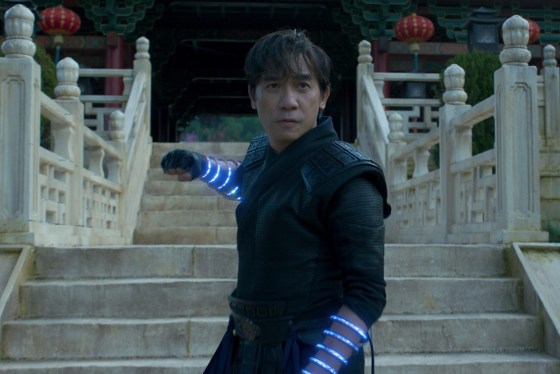
Tony Leung in Shang-Chi and the Legend of the Ten Rings, 2021.
Courtesy Marvel StudiosTony Leung in Shang-Chi and the Legend of the Ten Rings, 2021.

Leung doesn’t feel beholden to geography. “Throughout my career I’ve been collaborating with different talents from Taiwan, Vietnam, France, China, Hong Kong,” he says. “I just really enjoy collaborating with different talents from around the world.”

Despite Leung’s dozens of award nominations and wins in Hong Kong and reputation as a legendary performer in Asian cinema, his mindset as a perfectionist is clear as we close our video call on the note of success. “I never really consider myself as successful because I always look back and think that there must be something that I could do better,” Leung says.

“When people ask me what’s my favorite film, I’ll say, ‘The next one,’ because I always say that there’s room for improvement.”

Five Science-Fiction Movies to Stream Now


By Elisabeth Vincentelli via NYT Movies https://ift.tt/38B1iLC

Jean-Paul Belmondo, Magnetic Star of the French New Wave, Dies at 88


By Rick Lyman via NYT Movies https://ift.tt/3n8tzl2
 
Copyright 2009 Great Movies Database News. All rights reserved.
Free WordPress Themes Presented by EZwpthemes.
Bloggerized by Miss Dothy