Ma Rainey, known as the “Mother of the Blues,” isn’t nearly as famous as the blues artists who built on her foundation, from Bessie Smith to Billie Holiday. But her overlooked legacy is being revisited thanks to the release ofMa Rainey’s Black Bottom, a film adaptation of August Wilson’s acclaimed 1982 play that arrived on Netflix on Friday. In it, Viola Davis plays Rainey with both regal composure and pitch-black fury over the course of a sweltering afternoon recording session in 1927, as she fights for respect and artistic autonomy.
The real Rainey would be out of a job just a year later: classic blues was fading in popularity in favor of swing jazz, and the advent of talking pictures had dented the centrality of live performances. But Rainey’s impact on music, fashion and myth-making still lingers. Here are the ways in which Rainey was ahead of her time.
Rainey was a musical innovator
In the new film, Rainey’s style of blues is portrayed as archaic compared to the faster hot jazz preferred by her young band member Levee (Chadwick Boseman). While this contrast may have rung true in the late ‘20s, it was Rainey who was pioneering a new sound just a few years earlier. That style is now known as “classic blues”—but at the time, it was a unique and radical hybrid of several American forms, and Rainey was pivotal in creating and popularizing it.
Rainey was born in the 1880s in Columbus, Ga.; she performed on the vaudeville circuit for many years across the South, inheriting some performative traditions from minstrelsy and honing her outsize stage presence and comic timing. But while Rainey leaned into onstage maximalism, she was also mesmerizedby the blues guitarists she saw on the road who took a more spartan, improvisatory and emotionally raw approach to their music.
So Rainey began to incorporate blues songs and structures into performances, helping to pioneer a genre that wouldboth entertain crowds while also speaking candidly about Black life in America. This approach captured the imagination of many Black Americans at a transformative moment in which, thanks to the Great Migration, the longstanding divides between North and South, rural and urban, antique and modern were becoming eroded or blurred. Rainey’s duality made her a hit before Southern audiences as well as in Chicago where she recorded—and set a template for future waves of high-low Black musical innovation.
Rainey had a perfect voice for her new brand of music: low and gravelly, filled with both raw pathos and brassy authority. And it would likewise inspire imitators for generations to come.A young Louis Armstrong learned from Rainey while playing with her on several recordings (including “See See Rider,” a song that would later be covered by Elvis Presley, Ray Charles, Janis Joplin and Old Crow Medicine Show). The gritty-voiced Joplin was open about how Rainey was one of her biggest influences, and so was Bonnie Raitt: during Rainey’s Rock and Roll Hall of Fame Induction in 1990, she said that “the fire and gusto of Ma’s singing was exceptional.”
She was a formative storyteller of the Black female experience
Rainey didn’t just popularize the genre of classic blues: she helped write it. While other blues singers of the day, like Bessie Smith and Mamie Smith, largely sang songs written by others, Rainey penned at least one third of the songs she recorded. Many of those, like “Moonshine Blues” and “Ma Rainey’s Black Bottom,” would become standards of the genre to be covered time and again.
In an era dominated by white Tin Pan Alley composers, Rainey imbued her songs with the depth and diversity of her own experiences as well those of other Black women, portrayinganguish, rage, euphoria, love, sexual desire and much more. Angela Davis, in her 2011 bookBlues Legacies and Black Feminism, wrote that Rainey’s songs are full of women who “explicitly celebrate their right to conduct themselves as expansively and even as undesirably as men.” They wieldpistols, carouse until the morning, dodge the police, and sleep aroundfor revenge. “Have you ever been drunk, slept in all your clothes? And when you wake up, feel like you want a dose?” Rainey asks in “Dead Drunk Blues.”
“She transgressed these ideas of white middle class female respectability,” Kimberly Mack, an assistant literature professor at the University of Toledo and the author of Fictional Blues: Narrative Self-Invention from Bessie Smith to Jack White, said in an interview. “Through storytelling in both the words that she sang and also her lifestyle, she fought against heteronormative ideas of what a woman should be.”
In a1984 interview with the New York Times, Alice Walker says that the songwriting of Rainey and other blues singers was pivotal in helping to form the characters inThe Color Purple. “I loved the way they dealt with sexuality, with the relationships with men,” she says. “They showed you had a whole self and you were not to succumb to being somebody else’s—as they would say—’play toy.’”
She challenged sexual norms
Rainey gleefully leaned into in the sexual revolution of the Roaring Twenties,excelling at writing and performing the types of double entendres often used at the time. (The title song of “Ma Rainey’s Black Bottom,” for instance, refers both to sex as well as the Black neighborhoods of cities across the country, including Detroit.) Rainey sang about “sissy men” and mannish women, seemingly without judgment; onstage, she performed with “uninhibited, provocative movements,” according to Sandra Lieb, author of Mother of the Blues: A Study of Ma Rainey.
While very few public performers were fully out of the closet, Rainey didn’t try very hard to hide her bisexuality. In 1925, she was arrested for throwing an “indecent” and “intimate” party with a group of young women, forcing Bessie Smith—a possible lover of hers—to bail her out. A few years later, she would release “Prove It On Me Blues,” considered one of the earliest odes to lesbianism on record: “Went out last night with a crowd of my friends,” she sang. “They must’ve been women, ‘cause I don’t like no men. It’s true I wear a collar and tie. Makes the wind blow all the while.” A cartoonad for the songreleased by her record label Paramount embraces this genderbending: She wears a men’s three piece suit and fedora and mingles with two women on a corner, while a policeman watches suspiciously in the shadows.
“Her sexual braggadocio, popular in men’s blues songs, helped to create her legend as both fearless and sexually independent,” Mack says. It’s not hard to draw a line between that impulse and dominant themes running through hip-hop today.
Rainey was a fashion icon
Suits were far from the only fashion statement that Rainey made during her performing career. Long before bling was in vogue (or even a word), Rainey traveled with four trunks full of accessories which included ostrich plumes, sequins and jewelry. Onstage, she wore satin gowns and diamond tiaras; a necklace of gold coins often hung from her neck. “When she started singing, the gold in her teeth would sparkle,” Rainey’s longtime musical director Thomas A. Dorsey wrote in his unpublished memoirs.
Rainey was a shrewd entrepreneur—but still a victim of exploitation
Thanks to her showmanship, songwriting and powerful voice, Rainey earned a reputation as one of the most dynamic performers in America in the 1920s, and her tour earnings reflected that popularity. She and her band could make a sizable$350 a weekon tour with the Theater Owners’ Booking Association (for comparison, George Williams and Bessie Brown could make $175, while superstar Bessie Smith raked in $600). Her ability to negotiate sizable contracts, combined with her generosity, made her a beloved bandleader among musicians. “I used to dream of joining Ma Rainey’s band because she treated her musicians so wonderfully, and she always bought them an instrument,” the jazz icon Lionel Hampton is quoted as saying in Chris Albertson’s biography of Bessie Smith,Bessie.Her shows were also some of the earliest integrated shows to take place in the Jim Crow South, according to Lieb.
But while Rainey earned a good amount of money, it wasn’t nearly the amount that she deserved. Asrace recordsflourished in the 1920s, record companies scrambled to sign Black artists while undermining them and exploiting them at every step. Executives coerced blues singers—especially those who had no experience in the recording industry—to sign away future royalties or even ownership of their songs, leaving many artists destitute after the peak of their popularity.
And this type of subterfuge was common at Rainey’s label Paramount, despite the fact that it was largely operated by a Black producer, J. Mayo Williams. Williams was known to be just as cutthroat as his white counterparts: he would later say that hesubscribedto the industry maxim “screw the artist before he screws you,” and that nine out of 10 Paramount artistsreceived no royaltiesregardless of their record sales. It was common practice for Williams to buy songs outright from artists for $5 to $20, keep the royalties for himself, and sit back andearn a steady livingoff them while the artists themselves struggled.
Rainey was fired from Paramount in 1928; it is unclear if she received royalties for her work. In 1935, she pivoted to another kind of leadership when she bought two movie halls: the Lyric and Airdome theaters, in Columbus Ga. She managed them until her death four years later.
By this time in 2019, it was obvious that 2020 was going to be a pivotal year for streaming media. Disney+ and Apple TV+ had just launched. Heavily hyped new platforms HBO Max, Peacock and, er, Quibi were preparing for their own debuts. The freshly conglomerated ViacomCBS seemed poised to overhaul its fragmented streaming strategy. (We’ll have to wait until 2021 for the result of that consolidation: a post-CBS-All-Access subscription service called Paramount+.) Established platforms Amazon Prime, Disney-owned Hulu and the monolithic Netflix would face their biggest competition yet.
What we didn’t know, of course, was that COVID-19 would hit the U.S. about 10 weeks into the year, with immediate, life-altering effects. Suddenly, the luckiest among us were stuck at home with lots of free time on our hands—time we might otherwise have spent in movie theaters or subway cars or restaurant dining rooms. So, we watched TV. Which increasingly means that we streamed it. And the abrupt shift in viewers’ attention, combined with the industry-wide changes we’d already anticipated, made for a singular year in streaming. Here, in eight items, are the conclusions I’ll take with me into 2021.
Netflix was tested—and came out stronger than ever
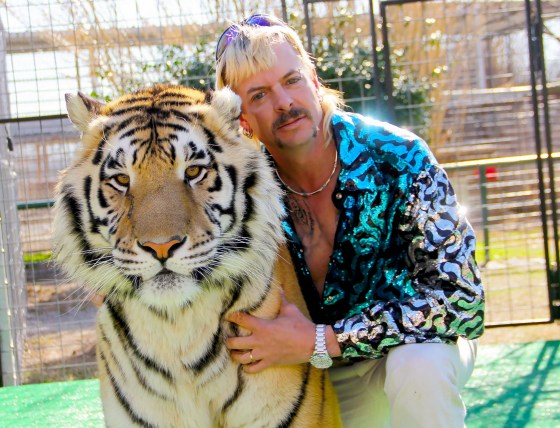
Courtesy of NetflixJoe Exotic and one of his tigers in Netflix’s ‘Tiger King’
A few years ago, Netflix switched on its content firehose, spewing out hundreds of new originals annually and leaving no doubt that Peak TV was upon us. This approach felt excessive—not to mention unfeasibly expensive—at the time; it’s not like Amazon Prime or Hulu was ever going to challenge a production slate of such a scale. But Netflix’s focus on building a robust library makes perfect sense now, with media conglomerates snatching back decades’ worth of licensed programming for their own proprietary services. Since November 2019, the saturation strategy has been put to the test with the launches of second-generation streaming services from corporate titans with money to burn: Disney+, HBO Max, Apple TV+, NBCUniversal’s freemium offering Peacock.
Yet it was Netflix that we turned to, more than any other streamer, when COVID lockdowns confined millions of us to our homes. Even as several cornerstones of its collection—including Friends, now an HBO Max exclusive—departed for the new services to be launched by their copyright holders, Netflix achieved record-setting growth in the first quarter of the year, adding nearly 16 million subscribers. The company warned shareholders, in the spring, of a slowdown later in 2020 because such a pace wasn’t sustainable. That prediction proved accurate: Netflix gained just 2.2 million subscribers in between July and September, even falling a bit short of an internal projection of 2.5 million, in its smallest quarterly increase since 2016.
Still, with more than 195 million subscribers worldwide—and projections suggesting that it will pass the 200 million mark before 2021—as well as a near-monopoly on Nielsen’s weekly streaming top-10 list, Netflix has retained its industry-leader crown amid a year of unique challenges. By increasing and diversifying its original programming, the service has positioned itself as a viable alternative to traditional TV as a whole. In other words: its long game is working. Viewers who once shelled out for cable plus a premium channel or two might now make Netflix the center of their televisual universe, throw in a few subscriptions to Disney+ or Prime or even niche services like Criterion or Acorn, and still save money—a calculation that’s more important than ever for households squeezed by the COVID economy.
In less quantifiable (especially if you’re skeptical of the platform’s self-reported viewership stats) terms, Netflix had an unprecedented impact on the culture in a year when all entertainment was home entertainment. Slate’s Willa Paskin calls this not-entirely-positive development the “Netflix Moment,” with the service functioning as “the backdrop of everything, driving the market, setting the tone, and increasingly becoming the default place for audiences to find content.” Netflix action movies like Extraction, The Old Guard and Spenser Confidential filled the void when multiplex spectacles got pushed to 2021. Tiger King captivated news-weary viewers early in the pandemic, making Joe Exotic and Carole Baskin household names; now, Amazon is developing a series based on their story that stars Nicolas Cage. The Queen’s Gambit started a chess fad. A few years back, many critics were pronouncing the death of the monoculture. Well, it turns out the afterlife looks a lot like Netflix.
Meanwhile, Netflix’s biggest competitors—Disney and WarnerMedia—are stepping up their games for 2021
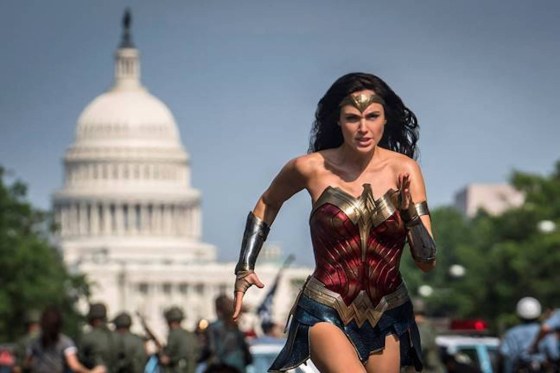
Warner MediaGal Gadot in ‘Wonder Woman 1984,’ the first of Warner Bros. blockbusters that will simultaneously debut in theaters and on HBO Max
To call the ongoing struggle for the future of home entertainment the “Streaming Wars” has always been a bit misleading. It’s cable providers that have been hit hardest by the rise of streaming, not the deep-pocketed corporate monoliths like Disney, Amazon, NBCUniversal parent Comcast and WarnerMedia parent AT&T that own major streaming platforms (of course, some of those monoliths own cable providers as well). By 2019, more Americans subscribed to a streaming service than to cable, and recent studies have found that the average consumer pays for around four such subscriptions. Which suggests that the proliferation of platforms, and thus viewing options, has helped to reinforce the streaming business as a whole.
So it’s not entirely accurate to position other streaming services as a threat to Netflix. Still, it’s worth noting that none of the company’s rivals has attracted nearly as many subscribers. While Disney+ racked up 86.8 million paying customers globally in its first year, HBO Max—which only launched in May—boasts just 12.6 million activations in the U.S. These aren’t bad numbers at all; both services say they’re beating expectations. But, enviable libraries aside, neither Disney+ nor HBO Max launched with a quantity or diversity of new originals to rival, or even rattle, Netflix. That might have diminished the sense of urgency viewers (especially those who weren’t parents of Disney-obsessed kids) felt around signing up. Deadline reports, for instance, that while Max is free for HBO subscribers, only 30% had activated their accounts by early December.
Yet Disney and Warner, both companies whose theatrical release slates were thrown into chaos by the pandemic, have plans to double down on their streaming offerings in the coming year. Warner Bros. has announced that all 17 movies on its 2021 schedule—including big-budget spectacles such as The Suicide Squad and Dune, as well as prestige fare from the likes of Angelina Jolie and Lin-Manuel Miranda—will debut on HBO Max the same day they hit theaters. (This is a big, scary deal for a film industry built around blockbusters.) Considering the spike in activations and engagement that coincided with news that Wonder Woman 1984 would premiere on Max this Christmas, this could very well be a game-changer for the service.
Not to be upstaged, Disney, in a widely publicized investor call on Dec. 10, unveiled a plan to roll out 50 new Marvel, Star Wars, Pixar and Disney animated and live-action series in the next few years. If the company’s projections turn out to be correct, though of course there’s no guarantee that they will, Disney+ will surpass Netflix in subscribers sometime around 2024—and some analysts predict this could happen much sooner.
Intellectual property is more important than ever
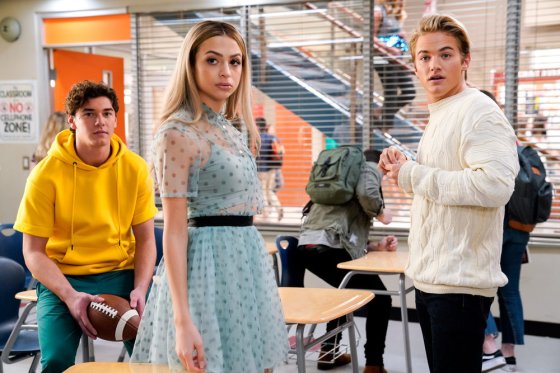
Casey Durkin/PeacockA still from Peacock’s reboot of ‘Saved by the Bell,’ which features several original cast members
If Disney seems more sanguine than Warner about debuting features in theaters next year, its streaming strategy and HBO Max’s overlap in one crucial way: both companies are gorging on existing intellectual property. The 50 new programs in the works for Disney+ include 10 Star Wars shows and 10 in the Marvel universe, as well as plenty of Disney and Pixar movie spin-offs. Disney’s streaming content for adults, which lives on Hulu in the U.S., already includes The Hardy Boys, Animaniacs and a handful of grownup Marvel series, among others. Douglas Adams’ The Hitchhiker’s Guide to the Galaxy is in development.
HBO Max, meanwhile, already offers streaming originals from DC Comics, Looney Tunes and Sesame Street; more from those franchises is on the way, plus a Friends reunion special and new takes on Gossip Girl, Gremlins, Hanna-Barbera cartoons, The Boondocks. That’s in addition to HBO proper, which in many ways remains TV’s creative standard bearer. The network is now at work on Game of Thrones prequel House of the Dragon, a Parasite miniseries, an adaptation of the Last of Us video games and even—in a move that illustrates just how desperate television is to capitalize on known quantities—a True Blood reboot.
HBO isn’t the only prestige network that’s been dragged into the IP wars. Absorbed into Disney when the latter bought 21st Century Fox in 2019, FX got its own hub on Hulu this year—an addition that vastly improved Hulu’s stable of originals and significantly increased the potential audience for FX shows. Soon, FX on Hulu will house an adaptation of hit comic Y: The Last Man and a series in the Alien franchise from FX stalwart Noah Hawley. Any of these HBO or FX shows could be as great as Hawley’s Coen Brothers riff Fargo (except, probably, True Blood 2.0), but it would be hard for them to feel as fresh as era-defining auteur projects like The Sopranos or Atlanta.
The other big streamers are hardly sitting out the IP arms race, either. Netflix made hits, this past year, out of The Baby-Sitters’ Club books, an Unsolved Mysteries revival and The Haunting of Bly Manor, the second season of a homegrown classic-ghost-story-adaptation anthology. Amazon, whose long-awaited Lord of the Rings series is expected to debut in 2021, has gone big on crowd-pleasing genre fare, with adaptations ranging from superhero comic The Boys to the cult UK sci-fi series Utopia. NBCUniversal’s Peacock, which launched in July, seems to be building an identity almost solely by transforming beloved TV shows of the past into franchises. The platform finally managed to draw some attention to one of its “originals” with November’s Saved by the Bell revival, and new takes on The Fresh Prince of Bel-Air, Law & Order, Battlestar Galactica, Punky Brewster and more are reportedly in the offing.
It’s fair to ask whether IP mania is really such a bad thing. After all, the TV space is expanding too fast for all of the ideas to be new, and adaptations of hyped “properties” aren’t necessarily more artistically ambitious than hacky but technically original concepts (compare HBO’s transcendent My Brilliant Friend to Netflix’s abysmal Space Force, then despair over how many more people watched the latter). What has worried me since Disney+ was announced is a larger trend where franchise extensions and other mega-budget tent poles from media conglomerates crowd out the small, weird cable and streaming series that have made Peak TV more than just a trash heap of monetized content. I take no pleasure in confirming that, as corporate streaming services proliferate, each with its own IP to exploit, this shift appears to be very much underway.
The pandemic accelerated cable’s inevitable demise
The writing has been on the wall for cable—expensive, inconvenient and limited in its customization options as it is—for years. But the early months of the pandemic were especially rough on that business, as everything from canceled pro sports seasons to expanded appetites for binge viewing cut into their core business. Meanwhile, the launches of HBO Max, Peacock, Disney+ and Hulu’s FX hub have provided stronger footholds in streaming for such popular cable channels as ESPN, TBS, USA, TNT and MSNBC. And when the subscription service discovery+ launches on Jan. 4, it will feature content from four of the 10 most-watched cable channels: HGTV, Food Network, TLC and Discovery Channel. “This,” an ad exec told Digiday,” is for cord cutters.”
In November, Forbes reported that cable will have lost something like 6 million subscribers in 2020 alone. Such a powerful trend would be extremely tough to reverse at this point, especially considering that major entertainment companies have mostly stopped trying to turn back the clock and shifted focus to monetizing their shows via streaming. So, who loses in the long run? Smaller channels and entertainment companies that relied on cable bundling to survive, as well as viewers who don’t have broadband internet, smart TVs or a basic understanding of streaming technology.
As cable languishes, streaming is going to get more expensive
One of the best reasons to cut the cord has always been the relative affordability of streaming. For those who choose to hang on to cable, monthly costs continue to climb, with the average bill now soaring into the triple digits. But streaming is getting more expensive with each passing year, as well. In October, Netflix announced that it would start charging $1 more per month for its standard plan and $2 more for premium options. Disney+ followed, weeks later, with news of its own $1 monthly price hike beginning in 2021.
These are pretty modest, reasonable increases. (Viewers who look to Hulu+ Live TV for a combination of streaming convenience and live access to linear broadcast and cable programs have more to complain about. They recently got word of a whopping $10/month, or 16-18%, increase.) But industry analysts expect that they’re only the beginning. After all, these price corrections represent both streaming’s new role as an alternative (rather than a supplement) to cable and the huge sums of money that leading services spend on original programming. Netflix regularly takes on debt in order to expand its offerings and become indispensable to potential lifelong subscribers. And competition between Netflix and Disney+, in particular, seems likely to result in even bigger content spends for both platforms. Sooner or later, these corporations, and the ones struggling to keep pace with them, will have to pass their skyrocketing costs on to customers.
Reality and lifestyle TV are more crucial than ever
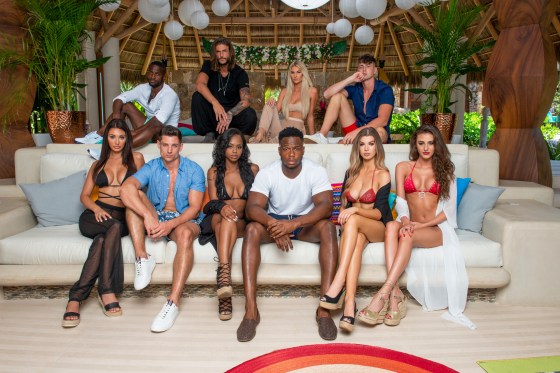
Aline Arruda/NetflixThe cast of Netflix’s ‘Too Hot to Handle.’
Conventional wisdom holds that in the mid-2000s, a renaissance in scripted television beat back the scourge of reality TV. But the truth is, while AMC, FX and premium channels invested in the kind of prestige-y programming that the chattering classes love to chatter about, the cost-effective reality genre kept thriving on Bravo, TLC and the broadcast networks for whom ancient-in-TV-years franchises like The Bachelor and Survivor remain perennial hits. Lifestyle channels such as eager-to-please Food Network and particularly HGTV, for their parts, appeal to both sides of a polarized country with shows that soothe its many anxieties. So it makes sense that, in recent years, streaming services—notably Netflix—have used original reality and lifestyle programming to lure cable subscribers who care less about appointment television than about having access to a 24/7 stream of design, food, DIY and Real Housewives content. (That helps to explain why, for instance, Netflix and Amazon have each created their own Project Runway knockoff.)
These investments have paid unexpected dividends in pandemic-stricken 2020. Whether you think of this lightweight nonfiction programming as part of a relatively benign pendulum swing away from dark, dense dramas and toward “peak comfort” or as one variety of the brain-numbing audiovisual muzak that is “ambient TV,” if not a little bit of both, there’s no denying that it was everywhere this year. With so many Americans stuck at home, in their off-hours as well as during the workday, HGTV and the Food Network saw enormous ratings jumps. Wellness TV is a thing now. And audiences ate up just about every flashy nonfiction show Netflix had to offer, from beloved stalwarts (The Great British Baking Show, Queer Eye) to supremely silly debut series such as Gwyneth Paltrow’s The Goop Lab, Indian Matchmaking and Too Hot to Handle.
The trend shows no sign of letting up. Earlier this month, Disney announced that reality TV’s first family, the Kardashian-Jenners, had signed a multi-year deal to create exclusive content for Hulu and its counterparts around the world, with the first examples rolling out in 2021. Before that, discovery+ will launch with 50 originals, including spin-offs of TLC’s 90-Day Fiancé, Food Network’s Chopped, HGTV’s House Hunters and (too) much more. Honestly, I’m exhausted just thinking about it all. The only upside is that, if there’s a ceiling to reality and lifestyle content, it will likely come into view by the end of next year.
Second-generation streaming services (even the ones that aren’t Disney+) are starting to find their respective niches
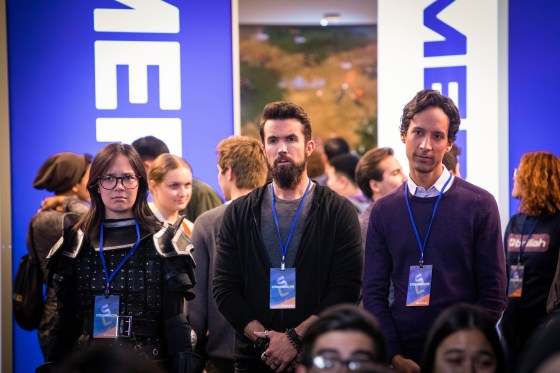
Apple TV+Charlotte Nicdao, Rob McElhenney and Danny Pudi in ‘Mythic Quest: Raven’s Banquet’
OK, so cable is in a death spiral, IP rules everything around us, Warner is kicking movie theaters while they’re down, Netflix is our streaming overlord—at least until Disney+ really gets going—and the COVID-damaged marketplace is saturated with reality and lifestyle fluff. Anything positive to report on the streaming front?
Actually, yes! The best news I’ll take away from the year in streaming is that, wearying though the past 14 months of major subscription-service launches have been, at least they’re finally starting to pay off in worthwhile shows. Apple TV+ had a disappointing first few months in late 2019, as The Morning Show and other expensive originals (with the exception of the wonderfully weird Dickinson) failed to impress. But this year it’s carved out a niche with some of TV’s best new comedies—Ted Lasso, Mythic Quest, Central Park—and a fantastic slate of documentary series (Visible: Out on Television, Home) and features (Beastie Boys Story, Boys State,Fireball: Visitors From Darker Worlds). HBO Max also started out slow but has built momentum with more-playful-than-HBO originals like bubbly thriller The Flight Attendant, bruising Britcom I Hate Suzie, wild doc Class Action Park and Let Them All Talk—a Steven Soderbergh feature that sends Meryl Streep, Candice Bergen and Dianne Wiest across the ocean on the Queen Mary 2.
Fans of international TV, in particular, should be thrilled by the increased options. Along with Suzie, standouts on Max include the sharply written British comedies Stath Lets Flats and Pure, the acclaimed Spanish drama Veneno and Crunchyroll’s exuberant Japanese anime Keep Your Hands Off Eizouken! Peacock has specialized in English-language imports (many of them from the UK-based Comcast subsidiary Sky), offering brainy thriller The Capture, the racially charged alternate history epic Noughts + Crosses and more. Watching all of it would be impossible, but if ever there was a year to try, 2020 would’ve been the one.
Quibi is a cautionary tale for entertainment startups everywhere
Quibi’s bites were quick to watch, and quick to bite the dust.
More good news: Quibi failed. I’m not saying this to be snarky, though I’ll admit that the prospect of watching 10 minutes’ worth of a movie while waiting in line at the grocery store never appealed to me. But in an overcrowded streaming market, it’s a relief to see bad ideas flame out quickly so something better can emerge. The brainchild of DreamWorks co-founder Jeffrey Katzenberg and former Hewlett Packard CEO Meg Whitman, Quibi raised an astonishing $1.75 billion before launching in April with an enormous catalog of expensive, celebrity-packed but mostly uninspired short-form series. (It wasn’t ideal, either, to debut a product tailored to the urban commute during a pandemic.) The debacle always felt like an exercise in entrepreneurial hubris, as a feedback loop of baby boomers poured money into an idea whose many major flaws most smartphone users under 50—i.e., Quibi’s target audience—could easily have spotted. A premium mobile streaming service still seems inevitable, whether I’m excited for it or not. But the disaster that was Quibi suggests that to succeed, its founders will need to understand what viewers raised on free video platforms like Instagram, YouTube and TikTok want. That’s a valuable lesson for upstart entertainment ventures—and one that every company, new and old, in the streaming space will eventually have to absorb.
Luke Skywalker is back, thanks to movie magic (and CGI). Just when Mando’s mission to save Baby Yoda (now known as Grogu) from an Imperial ship looked to be doomed, Skywalker arrived on his X-Wing and proceeded to take out scores of Dark Trooper droids. Luke’s arrival, of course, meant the departure of Grogu, as The Child went off to train with the most famous Jedi in the galaxy.
It’s unclear what that means for Grogu’s fate: Was he with Luke when Skywalker began training Kylo Ren? Was he killed by Kylo? Did he decide to abandon his Jedi training and explore the galaxy with his adoptive dad Mando instead? (We’re betting on some version of that last scenario considering how adorable Baby Yoda is and, thus, integral to the show, which is set to return next December.)
One thing that stood out about Luke’s cameo was how similar the scene was to the final moments of Rogue One, when Luke’s father, Darth Vader, slaughtered a bunch of Rebel soldiers in an effort to re-secure the stolen Death Star plans. Here are the callbacks in the episode.
A major character makes a surprise appearance at the end
Perhaps the most thrilling moment of Rogue One came in its final minutes when, after following characters we’d never met before for the entire film, we suddenly were flooded with cameos by some of the most iconic figures in the Star Wars universe. First comes Darth Vader in one of his most epic fight scenes in the series. He cuts through dozens of Rebellion soldiers trying to deliver the plans for the Death Star to Leia’s ship. And then of course there is Leia, who receives the plans and opines about hope.
The Mandalorian has had plenty of cameos to be sure, including Boba Fett from the original trilogy and Ahsoka Tano from Clone Wars, both of whom are getting their own live-action series. But none of the main characters from the saga have appeared—no Leia, no Han and, until this point, no Luke. Like Rogue One, The Mandalorian was building toward this climactic moment in which the side story connected with the main Skywalker saga.
They use the same de-aging technology on Luke and Leia
Im not saying they looked good. After the first viewing it was much more noticeable but Luke definitely did not look better than Leia and Tarkin in Rogue One pic.twitter.com/uEyMQhoWam
Despite Internet protestations that Sebastian Stan, a dead ringer for Mark Hamill, ought to play a young Luke, Lucasfilm decided to use the same de-aging technology on Hamill that they once used to generate a young Carrie Fisher at the end of Rogue One. Similar tech was used for that movie’s Grand Moff Tarkin character, originally played by the late Peter Cushing.
Luke’s hallway battle looks a lot like Rogue One’s Darth Vader scene
Luke’s infiltration of the Empire ship is a clear callback to that Darth Vader scene in Rogue One. Both begin with a group, guns pointed at a door, awaiting whatever force is going to enter and wreak havoc. In the case of Rogue One, it’s a group of Rebellion soldiers staring into the mist waiting for Darth Vader to emerge, illuminated by his red lightsaber. In The Mandalorian, it’s a group of Dark Troopers waiting for Luke to arrive on an elevator. The elevator’s beeping even parallels the rhythmic thrum of the ship alarms in Rogue One.
When Luke does emerge, he uses many of the same moves as his dad did, deflecting blaster shots with his lightsaber and tossing bodies around in the air. Somewhat disturbingly, he even borrows Darth Vader’s chocking trick. We can take some comfort in the fact that instead of squeezing his hands in the air to suffocate a human, he uses his power to crush a droid, though Solo’s L3 would argue that droids have rights too.
But the most obvious analog comes with the final shot of Luke’s fight scene, where he, like Vader, emerges from the mist, lit only by his saber. It’s the first time we see Mark Hamill’s (de-aged) face.
Themes of fatherhood persist
Just about every character in the Star Wars universe has serious daddy issues. Luke, who believed himself an orphan, discovers his father is the galaxy’s foremost villain, but is eventually able to turn him to the Light Side; Jyn Erso saves the galaxy by connecting with her father and realizing he was a good guy all along; Rey finds out her grandfather was an even more evil figure than Darth Vader, one who can’t be turned, but takes on Leia and Luke as surrogate parents instead.
Parents, meanwhile, stew in their parenting mistakes: Leia mourns the loss of her son, Kylo Ren, to the Dark Side after Ren kills his father, Han Solo. Obi-Wan, a father figure to Anakin, struggles with the choices that led Anakin to turn evil. The list goes on.
The Mandalorian (thankfully) puts a new spin on the well-trod saga of an orphan in search of a father figure. Mando, orphaned himself as a child, takes on the abandoned Grogu first as his protector, but later as his father. At the beginning of the series, characters called Grogu “The Child,” but by midway through season 2, they’re referring to the toddling alien as “Mando’s kid” and “his child,” acknowledging the connection the two of them have made.
Unlike past stories that largely told the sagas of parenthood from the point of view of the abandoned child (Luke, Jyn, Rey), The Mandalorian spun its tale primarily from the perspective of the adoptive father—one who, as far as we can tell, didn’t screw up that badly. (There aren’t any signals when Grogu leaves with Luke that he’s destined to turn to the Dark Side like Anakin or Kylo.)
That makes Grogu and Mando’s farewell all the more heart-wrenching. It’s an inversion of the Rogue One scene in which Leia’s ship takes off just as Darth Vader is about to board. It’s a relief when those blood relatives, a father and daughter standing on opposite sides of the battle of good and evil, separate. It’s devastating when Grogu and Mando, not blood related, not even the same species, but aligned in their love for one another, part ways.
Spoilers for The Mandalorian’s season two finale below.
Disney announced a slew of new Star Wars shows during an investor call earlier this month, including two directly tied to The Mandalorian: an Asokha series and a drama called Rangers of the New Republic. But the studio was not done plumbing the depths of the Mandalorian IP yet. The season two finale of the hit Disney+ show previewed yet another spinoff series, set for December 2021: The Book of Boba Fett.
The episode itself was jam-packed with action: Mando gathered together a crew to save Baby Yoda (now technically called Grogu, but Baby Yoda sounds cuter) from the villainous Moff Gideon. Boba Fett created a diversion for the rest of the gang and then flew off into space. Mando then secured Baby Yoda and the Darksaber by defeating Moff Gideon in battle, but faced a dire challenge in the form of the Dark Troopers, lethal Imperial droids. Then none other than Luke Skywalker arrived to save Mando’s posse and take on The Child as his apprentice.
For story reasons, it’s rather convenient that Boba Fett wasn’t around for Luke’s cameo—considering that Boba once hunted down and tried to kill Luke and his friends, that would have made for an awkward reunion.
But that’s not the last we see of Fett. In a post-credits scene, he and Fennec infiltrate the late Jabba the Hutt’s palace on Tatooine, now occupied by some of Boba’s old sycophants, including Bib Fortuna. They kill nearly everyone, let a slave escape, and make themselves comfortable on Jabba’s throne. Then “Book of Boba” flashes across the screen, along with the December 2021 premiere date.
The announcement comes just one day after original Boba Fett actor Jeremy Bulloch died at the age of 75.
Book of Boba is the ninth Star Wars show now in the works at Disney+, along with a third season of The Mandalorian, the Rogue One prequel Andor, a Mandalorian spinoff titled Rangers of the New Republic, an Obi-Wan show set between Episodes III and IV, Ahsoka centered on Jedi Ahsoka Tano, animated series The Bad Batch, a show called The Acolyte from the creator of Netflix’s Russian Doll, and Lando starring the cape-loving crusader himself.
The blues are both a musical style and a vibe, a sort of rolling, glistening, down-and-dirty glamour that can’t be faked. As storied blues artist Ma Rainey, Viola Davis slips into that vibe as if it were a fringed silken gown. With her hip-swinging sashay, her eyelids glazed the color of bruised plums, she’s a seductress of everyone who meets her gaze, and she’s the sultry anchor of Ma Rainey’s Black Bottom, George C. Wolfe’s film version of August Wilson’s 1982 play, now streaming on Netflix.
Ma Rainey was a blues pioneer, and part of the first wave of blues artists to commit their voices to record, and Ma Rainey’s Black Bottom takes place during a 1927 recording session in Chicago. Ma, already hugely successful, shows up late—because she can. Her manager, Irvin (Jeremy Shamos), will do anything to placate her; she’s his bread and butter. But as Ma points out during the course of the session, Irvin isn’t a friend to her: he has invited her to his house only once, and that was to sing for his white friends. This detail speaks volumes about even the most cordial relationships between Black artists and the white people who have historically made money off them, though it also underscores another point: Irvin needs Ma more than Ma needs him. Her gifts make her his superior by a mile.
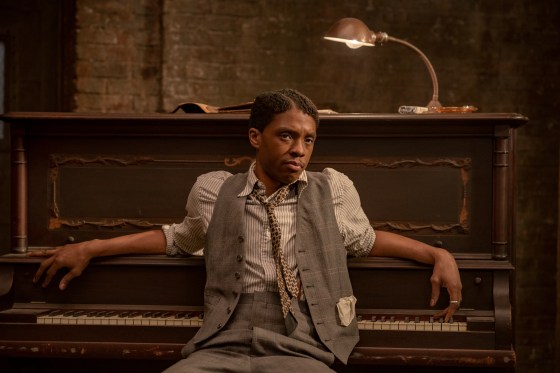
The members of Ma’s band bow to her, too: Cutler (Colman Domingo), the leader, makes it clear that they’re an “accompaniment” band, committed to following wherever Ma’s vocals lead. Bassist Slow Drag (Michael Potts) and pianist Toledo (Glynn Turman) follow that law dutifully. But brash new trumpeter Levee—played by Chadwick Boseman, in one of his final performances—wants to shake things up; he drops bold filigree runs into spaces where Ma wants simplicity. He also has eyes for Ma’s saucy girlfriend, Dussie Mae (Taylour Paige), much to Ma’s simmering annoyance. His boldness—right down to his recent purchase of a pair of dazzling yellow shoes—is so charismatic that it’s threatening even to a superstar like Ma.
Levee is a brilliant musician but also a troubled soul. When his bandmates accuse him of kowtowing to the record label’s white boss, he shuts them down with a chilling story from his childhood. Boseman’s performance is terrific; it has a tense, metallic edge, as if Levee’s musical talents, his sunny buoyancy and his justified rage were all jabbing at each other every minute, resulting in a jangle of noise in his head. And Turman, as the gentle, well-read Toledo, who both stands up to Levee and tries to guide him, gives a quieter but equally potent performance. Their scenes together capture both the casual camaraderie and the simmering tension between musicians who have to put their differences aside to play with one another.
Ma Rainey’s Black Bottom is part of Wilson’s 10-play Pittsburgh Cycle, focusing on the experiences of Black Americans throughout the 20th Century, and watching Wolfe’s reimagining, it’s easy to imagine how dazzling this show must have been onstage. The film occasionally suffers from the slight stiffness that often afflicts movies adapted from theater. But to watch these actors is pure pleasure, and with their help, Wolfe captures the danger and glamour, the unrest and the go-for-broke joy, of artists who were making music on the edge in the 1920s. When Davis’ Ma steps up to the microphone to sing one of her brazen, elegantly salacious numbers—after sucking down a bottle of the Coca Cola she’s written into her contract—you’re not sure if the heavens are ready to open up with a gift of sun or if the ground beneath her feet will crack apart to reveal the flames of hell. She’s perched right between the two possibilities, holding steady, trusting in nothing but the bold, after-midnight certainty of her voice. It’s a star that never steers her wrong.
Director Patrick Liu did not play the trumpet in his high school marching band. Unlike Chang Jia-Han, the lead character in Liu’s movieYour Name Engraved Herein, Liu played the flute. But there’s special meaning to the instrument of choice for Chang Jia-Han (Edward Chen)—nicknamed A-Han. “To quote our composer, the trumpet has a sound quality of wanting to say something, but not being able to get it out,” Liu tells TIME in Mandarin. This feeling is familiar to A-Han. Pressure builds inside him as he falls for bandmate Wang Birdy (Jing-Hua Tseng) and wonders if he will ever be able to freely express his love. The feeling is also familiar to Liu.
Of the few dozen LGBTQ films in the history of Taiwanese cinema, Liu’s has been the most successful at the box office—Your Name Engraved Herein,which premieres globally on Netflix Dec. 23, is Taiwan’shighest-grossing LGBTQ-themed movieof all time. Earlier in December, the moviesurpassed NT$100M(around US$3.5M) and is one of only two domestic films to reach this marker in 2020. The moviescreened locally beginning in September, more than a year after the self-governing island becamethe first place in Asiato legalize same-sex marriage. But the film focuses on a period long before this right existed, in 1987, whenmartial law had just lifted, prompting Taiwan toward a gradual transition in the direction of greater liberties including freedom of speech and press. At the time, homophobia was widespread and openly gay individuals were largely ostracized by society.
It’s against this backdrop that A-Han and Birdy’s story unfolds as their friendship grows into something more. The particular arc of A-Han is about “80%” based on Liu’s own experiences, according to the director. “Originally, my intention wasn’t to make a gay film, it was to make a personal film,” he says. “This is about my first love, and my first love happened to be a story of a boy liking another boy.” Whatever his intention at the outset,Your Name Engraved Hereinis fast on its way to becoming a new classic of LGBTQ cinema.
Bringing his own story to the screen
Prior to this film, Liu had primarily worked on idol drama series that he describes as overly dramatic and mostly detached from reality. With the new project, the director wanted to create something more intimate. He teamed up with producer Arthur Chu, who had attended the same high school as Liu and was familiar with his story.Through A-Han’s perspective, Liu recounts aspects of his first love: crossing paths with a woman, played by Mimi Shao, who turned the relationship into a love triangle; confiding in the school priest, Father Oliver, about his crush.
Some of the most piercing lines in the film come during the scenes when an exasperated A-Han questions this religious figure about why his love goes against the Bible’s teachings. These scenes are not entirely drawn from Liu’s experiences with the priest at his school, but they reflect some of the director’s views.“During the process of writing the script, what I thought was that no one can play the role of God and judge people for their gender or who they want to love,” says Liu, who grew up in a Christian household. “We are not God so we don’t have the right to be like him and tell Adam and Eve, you are naked and sinful.” The tension between faith and sexuality is one of the main forces driving the film, which opens with a line from Song of Solomon 8:7: “Many waters cannot quench love, neither can the floods drown it.”
Courtesy of Oxygen FilmsDirector Patrick Liu on set for ‘Your Name Engraved Herein’
The bittersweet feeling of overdue change
Production forYour Name Engraved Hereinstarted in 2018, before the legislation for marriage equality was enacted in Taiwan. “At that time, it was a very heated topic,” Liu says, “The opposition was actually quite vocal about this.” In November 2018, voters showed their support forrestricting marriage to a union between a man and a womanandagainst implementing LGBT education at schools, in a referendum designed to be a measure of public opinion that would advise lawmakers. At the time, theActing Director of Amnesty International Taiwancalled the results “a bitter blow and a step backwards for human rights in Taiwan.”
When parliament voted to legalize same-sex marriage on May 17, 2019 andPresident Tsai Ing-wensigned the legislation into effect days after, the historic milestone brought with it some mixed feelings for Liu. “When I saw people celebrating on the streets, I actually felt a little bit sorrowful because for the people from my generation—who were born in the ‘70s, for example—it may be too late for them,” he says. Many were not able to catch what he calls the “train of happiness.” “I would like to highlight some of the unfortunate stories that may have come too early so they didn’t get to see the celebration that we see today,” Liu explains about his approach to his work.Your Name Engraved Hereincaptures this sentiment. More than any other factor, the prevailing attitudes of 1980s Taiwan threaten to keep A-Han and Birdy apart.
Liu’s film honors one particular figure who has fought for gay rights for more than 30 years: activistChi Chia-wei. In one scene, A-Han and Birdy see Chi protesting against sexual orientation discrimination on the streets of Taipei with a sign that says “homosexuality is not a disease,” before police swarm toward him. “We wanted to put that segment into the film to pay tribute to what he has done all these years,” Liu says. In fact, he says the production crew met with Chilao-shi—Liu uses the honorific term referring to a teacher—and discussed his portrayal in the movie. One of Chi’s iconic protest looks was an outfit made of condoms, and this is the attire he’s wearing when A-Han and Birdy see him. “Our costume designer simply replicated the outfit,” Liu said, “and the character actually protested on the site where he protested in the past.”
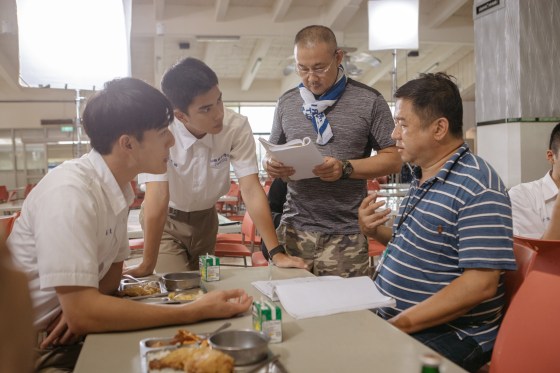
Courtesy of Oxygen FilmsFrom left to right: Edward Chen, Jing-Hua Tseng, Patrick Liu, Arthur Chu
Spreading a message of tolerance across Asia and beyond
Taiwan isone of the rare exceptions in Asiawith marriage rights for same-sex partnerships, even if acceptance of the policy is not ubiquitous. “We really hope that through Netflix the LGBT communities in other parts of Asia can see it,” Liu says. “The LGBT communities need a movie like this to tell them, ‘You are allowed to love, you are not guilty.’” Among other countries, he specifically expressed hope forYour Name Engraved Hereinto reach Malaysia and Singapore, where laws thatcriminalize same-sex relationsremain in place. These two places carry special meaning because they arehome to the songwriters—Hsu Yuan-Ting, Chia Wang and Chen Wen-Hua—who composed the film’s theme song. Titled after the movie and performed by artist Crowd Lu, the track has already won Best Original Song at Taiwan’s prestigious Golden Horse Awards with the music video approaching 20 million viewson YouTube. The trio of songwriters flew to Taiwan for the Golden Horse Awards. As Liu recalls, “They were very excited that their work can actually be nominated and connect with an LGBT film.”
WithYour Name Engraved Herein, Liu and Chu have crafted a story specific to Taiwan that is rich with political history, but universal in its message. “There are no differences between homosexual or heterosexual relationships,” Liu says. “There’s still pain, there’s still envy. We hope to show people that in homosexual relationships, love is still love.”
As much asYour Name Engraved Hereinis a reflection of Liu’s past, it has also been a catalyst for his future. “When I started to produce this film, I was thinking about whether I should come out to my mom,” he says, noting that his mother comes from a conservative background intertwined with her church community. At the beginning of the project, he kept details about the movie vague and said it was about “two young people falling in love in high school.” But during this past Chinese New Year, Liu’s mom brought out a bag of gold and said it would be his once he gets married. “I don’t know where my courage came from, but I decided to tell her that I’m actually gay and I’m not going to marry a girl,” Liu recalls. She was initially shocked, but, referring to Taiwan’s recent policy changes, she changed her tune. “It’s fine,” she said. “I think now you can get married as well.”